

Navigating the Emotional Landscape of Motherhood: Mental Health Insights
Why Mental Health for Mothers Deserves Your Attention
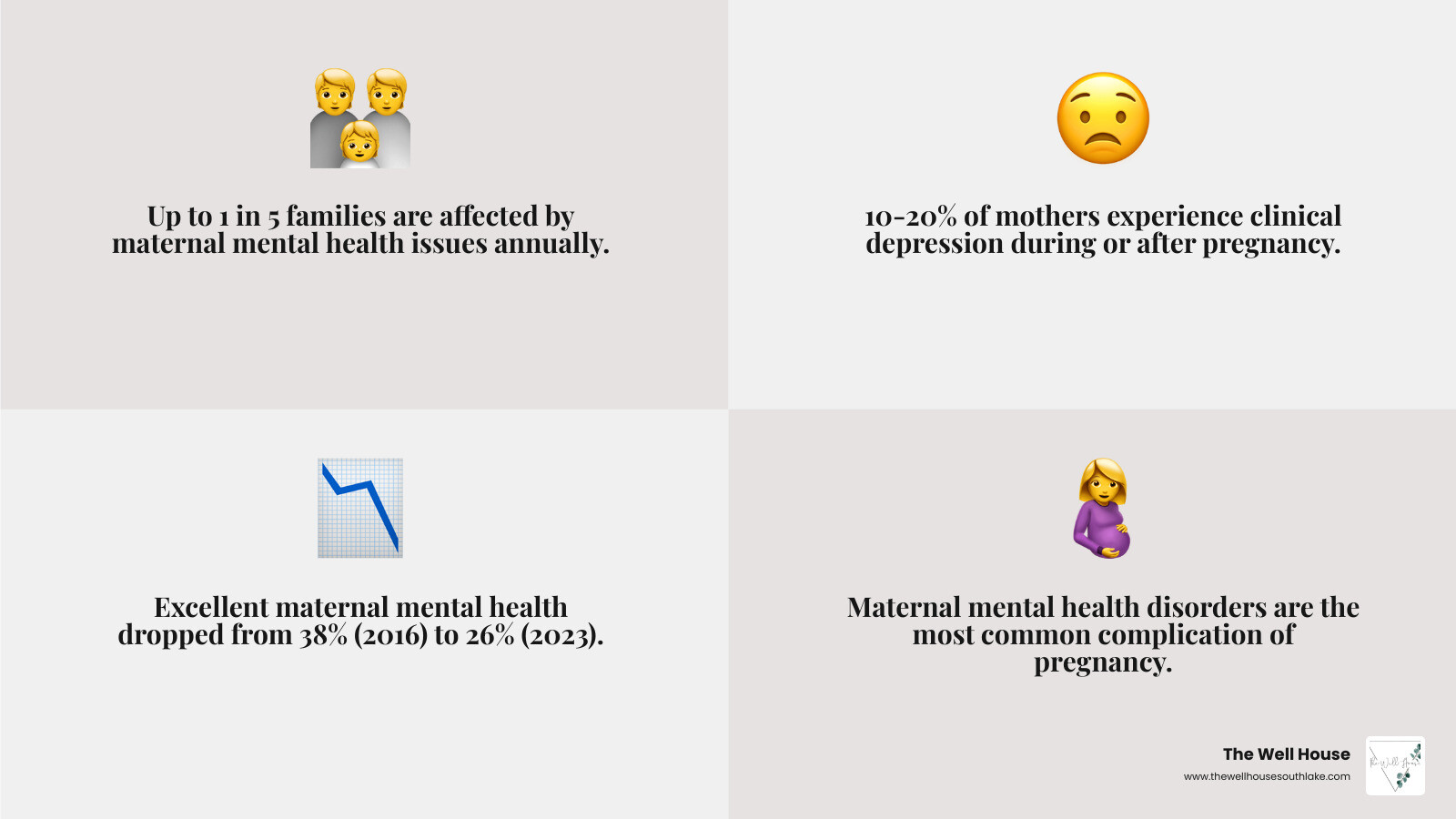
Mental health for mothers refers to the well-being of women during pregnancy and postpartum, affecting up to 1 in 5 U.S. families annually. It includes conditions like depression and anxiety that can emerge anytime during the perinatal period.
Key Facts About Maternal Mental Health:
- Prevalence: 10-20% of mothers experience clinical depression during or after pregnancy
- Common Conditions: Depression, anxiety, OCD, and rarely, psychosis
- Timeline: Can begin during pregnancy or within the first year after birth
- Impact: Affects mother-infant bonding, family dynamics, and child development
- Treatment: Highly treatable through therapy, lifestyle changes, and medication when needed
- Risk Factors: Previous mental health history, lack of support, difficult birth, hormonal changes
Motherhood is a journey of profound joy, but it also brings challenges like anxiety, overwhelm, and isolation that are rarely discussed openly. Recent data shows a troubling trend: mothers reporting excellent mental health dropped from 38% in 2016 to 26% in 2023, while those rating it as fair or poor increased significantly. These statistics represent real mothers needing support.
Maternal mental health disorders are the most common complication of pregnancy, yet they are often undertreated due to stigma. Many women fear that seeking help makes them inadequate mothers, which is untrue.
As Jennifer Kruse, a Licensed Professional Counselor Supervisor, I’ve witnessed the transformative power of compassionate, holistic care for mothers. Understanding that your mental wellness affects your entire family is the first step toward healing.
Mental health for mothers terminology:
The Emotional Reality of Motherhood: Beyond the Picture-Perfect
While motherhood includes beautiful, picture-perfect moments, they don’t tell the whole story. The reality is that motherhood is messy, emotionally intense, and a profound transition known as matrescence. Many mothers feel they’ve lost their pre-baby identity, a feeling complicated by societal pressure to live up to the exhausting “good mother” myth.
This pressure often leads to guilt, while the new reality of parenthood can bring on intense anxiety, isolation, and overwhelm. These feelings don’t make you a bad mother; they make you human. Understanding that mental health for mothers includes the full spectrum of emotions is crucial for coping with motherhood.

The “Baby Blues” vs. Something More
Up to 80% of new mothers experience the “baby blues”—temporary mood swings, tearfulness, and irritability caused by dramatic hormonal shifts, sleep deprivation, and the adjustment to a newborn. These feelings typically peak around day five and resolve within two weeks on their own.
However, when symptoms persist beyond two weeks, intensify, or interfere with your ability to function, you might be experiencing postpartum depression (PPD) or postpartum anxiety (PPA). Recognizing these conditions can be difficult, as symptoms overlap with the normal exhaustion of new motherhood, and stigma often prevents women from speaking up.
Knowing the key differences can help you recognize when to seek support:
| Feature | Baby Blues | Postpartum Depression (PPD) | Postpartum Anxiety (PPA) |
|---|---|---|---|
| Onset | Within first few days after birth | Within first year (often 2-8 weeks postpartum) | Within first year postpartum |
| Duration | Resolves within 2 weeks | Persists beyond 2 weeks, can last months without treatment | Ongoing without treatment |
| Severity | Mild to moderate | Moderate to severe | Moderate to severe |
| Key Symptoms | Mood swings, tearfulness, irritability, mild anxiety | Persistent sadness, hopelessness, loss of interest, difficulty bonding with baby | Excessive worry, racing thoughts, panic attacks, intrusive thoughts |
| Impact on Function | Minimal interference with daily activities | Significant difficulty with daily tasks and self-care | Difficulty relaxing, constant state of worry affecting daily life |
| Treatment Needed | Self-resolves with rest and support | Professional treatment recommended (therapy, possibly medication) | Professional treatment recommended (therapy, possibly medication) |
If you’re unsure what you’re experiencing, trust your instincts. Reaching out for support is always the right choice, as mental health for mothers deserves the same attention as physical health.
Understanding Maternal Mental Health Conditions
The perinatal period (conception through the first year postpartum) is a time of extraordinary change and vulnerability for a mother’s mental health. This is when Perinatal Mood and Anxiety Disorders (PMADs) most commonly emerge. Maternal mental health disorders are the most common complication of pregnancy, affecting up to 1 in 5 mothers in the U.S.

A recent study in JAMA Internal Medicine highlights this, showing a sharp drop in mothers reporting excellent mental health from 2016 to 2023. These statistics represent real mothers struggling in silence. Understanding the specific PMADs helps in recognizing when support is needed.
Postpartum Depression (PPD)
PPD is a major depressive disorder affecting up to 20% of mothers, with symptoms that can begin before, during, or after pregnancy. It involves persistent sadness, hopelessness, loss of interest, and overwhelming fatigue. Other symptoms include difficulty bonding with the baby, intense guilt, and trouble concentrating. In severe cases, thoughts of self-harm can occur and require immediate help. PPD is a treatable medical condition, not a personal failing. With proper Postpartum Support for Moms, you can recover. For more information, see these official resources on Postpartum depression.
Perinatal Anxiety Disorders
Perinatal anxiety is as common as depression, affecting about 20% of women. It’s more than typical worry; it’s an excessive, overwhelming fear that disrupts daily life, often involving racing thoughts about the baby’s safety. It can manifest as panic attacks with physical symptoms like heart palpitations and shortness of breath. Many mothers (70-100%) also experience unwanted, intrusive thoughts, often about harm coming to the baby. These thoughts are a symptom of anxiety, not a reflection of a mother’s intent. If you’re feeling overwhelmed, know you’re not alone. More info about What to Do When You’re Feeling Overwhelmed
Other Perinatal Mood and Anxiety Disorders (PMADs)
The spectrum of mental health for mothers extends beyond PPD and anxiety:
-
Postpartum Obsessive-Compulsive Disorder (OCD) involves intrusive thoughts (obsessions) and repetitive behaviors (compulsions) to reduce anxiety, such as constant checking or cleaning. It affects up to 17% of postpartum women.
-
Postpartum Psychosis is a rare (0.1% of births) but serious mental health emergency requiring immediate medical intervention. Symptoms include hallucinations, delusions, and bizarre behavior.
-
Bipolar Disorders involve extreme mood swings from mania to depression. The risk of a mood episode is high for women with a pre-existing diagnosis, but it can also emerge for the first time.
-
Birth Trauma and Childbirth Post-Traumatic Stress Disorder (CB-PTSD) can develop after a traumatic birth. Symptoms include flashbacks, nightmares, and intense anxiety related to the birth.
Because these conditions have overlapping symptoms, a professional evaluation is essential for an accurate diagnosis and effective treatment. Specialized care is key to recovery.
The Ripple Effect: Why Maternal Wellness Matters
A mother’s mental health affects the entire family. Her emotional state creates ripples that impact the mother-infant bond, child development, and overall family dynamics. Untreated maternal mental health issues can affect a baby’s secure attachment and a child’s emotional and cognitive growth. The entire household feels the strain, which is why informed partner support is a crucial protective factor. More info about Parenting Support for Dads
The long-term implications are significant. For mothers, conditions can become chronic. For children, it can lead to developmental delays and future mental health challenges. Getting help early is critical to prevent these intergenerational consequences.
Risk Factors for Maternal Mental Health Issues
Understanding risk factors helps identify when extra support is needed. Recognizing your vulnerability allows you to be proactive in seeking help.
- History of mental illness: A personal or family history of mental illness is a significant risk factor.
- Lack of social support: Isolation and a weak support system increase vulnerability.
- Traumatic birth experiences: A difficult or traumatic birth (affecting up to 33% of women) can trigger PTSD.
- Socioeconomic stress: Financial strain, relationship problems, or lack of resources add immense pressure. More info about Single Mothers Counseling: Complete Guide
- Hormonal changes and sleep deprivation: The dramatic biochemical shifts of the perinatal period, combined with severe sleep loss, directly impact mood.
- Other factors: Difficult pregnancies, birth complications, having multiples, and unplanned pregnancies are also risk factors.
- Birth loss and grief: Miscarriage or stillbirth triggers profound grief and significantly increases mental health risks. Systemic disparities also add layers of risk, with Black mothers facing higher rates of stillbirth.
Pathways to Wellness: Strategies for Improving Mental Health for Mothers
Finding your way through the emotional challenges of motherhood is about finding what works for you. At The Well House, we use a collaborative, holistic approach to help you thrive. Improving your Emotional Wellness for Moms is possible with the right strategies.
The Importance of Self-Care for the Mental Health for Mothers
Self-care is not selfish; it’s essential for your family’s well-being. Prioritizing your mental health for mothers gives your children a healthier, more present parent and builds your resilience. You can’t pour from an empty cup.
Self-care can be done in small, manageable moments. Take five-minute breaks to breathe, stretch, or practice mindfulness. Connect with a friend, or journal to process your emotions.
Here are some practical 5-minute self-care ideas:
- Step outside for fresh air.
- Do a quick body scan meditation.
- Dance to one favorite song.
- Write down three things you’re grateful for.
- Look at photos that make you smile.
Lifestyle Modifications for a Healthier Mind
Certain lifestyle changes can also profoundly support your mental well-being. Focus on progress, not perfection.
- Nutrition: Fuel your brain with balanced meals rich in whole foods, lean proteins, and fruits and vegetables.
- Gentle Exercise: A short walk or gentle yoga can be as effective as medication for anxiety and depression by releasing mood-boosting endorphins.
- Sleep Hygiene: While challenging, aim to improve sleep. Nap when the baby naps, create a calming bedtime routine, and ask for help with night feedings.
- Social Connection: Lean on your support system or join a Support Group for Moms. Connection is a powerful buffer against mental health challenges.
Professional Support for the Mental Health for Mothers
When self-care isn’t enough, seeking professional help is a sign of strength. Effective treatment options are available.
- Psychotherapy: Talk therapy is a cornerstone of treatment. Evidence-based approaches like Cognitive Behavioral Therapy (CBT) and Interpersonal Therapy (IPT) are highly effective.
- Medication: When appropriate, medication can be prescribed by your provider. The risk of an untreated disorder is often greater than the risk of medication, even when pregnant or breastfeeding.
- Individualized Treatment: An effective treatment plan is custom to your unique symptoms, history, and circumstances.
- Telehealth: We offer telehealth services to make getting help easier, removing barriers like childcare and travel. More info about The Ultimate Guide to Therapy Options for Moms
Building a Supportive World for Mothers
Improving maternal mental health support requires a collective effort. We need communities where mothers feel safe to discuss their struggles and where mental health for mothers is treated with the same urgency as physical health.
Stigma is a major obstacle. The fear of judgment and the myth of the effortlessly happy mother keep many women from seeking help. Destigmatizing these challenges allows for honest conversations and encourages mothers to get support without shame. Cultural variations also matter, and care must be sensitive to diverse perspectives on the postpartum experience.
Practical barriers also prevent mothers from getting help. These include a lack of awareness about treatable conditions, financial constraints, and challenges with childcare or transportation. Inadequate screening by the healthcare system can also leave symptoms unrecognized.
The Role of Education and Early Detection
We can change this landscape through education and early detection. Healthcare providers can make mental health assessments a standard part of perinatal care, using tools like the Edinburgh Postnatal Depression Scale (EPDS) to identify symptoms early.
Support should begin before symptoms appear. Prenatal education helps expectant mothers understand potential emotional challenges, know what’s normal, and learn where to find help. This empowers them to reach out early.
The World Health Organization’s guide for integrating perinatal mental health into maternal and child health services emphasizes creating safe environments for women to discuss their difficulties. Healing becomes possible when mothers are met with compassion. Maternal mental health is a community priority, and every effort to normalize these struggles moves us toward a world where no mother suffers alone.
Conclusion: You Are Not Alone on This Journey
Motherhood is filled with joy and challenges. If you’re struggling with your mental health for mothers, know that you are not failing or inadequate. You are experiencing something common to countless women.
Reaching out for help is a sign of strength. Prioritizing your well-being builds a healthier foundation for your family. Your baby needs a mother who is supported and cared for, and taking that step shows courage.
At The Well House, we honor each mother’s unique journey with a collaborative, holistic approach connecting mind, body, and spirit. Our specialized counselors create individualized care plans for every stage of motherhood, respecting your unique experiences and background. We offer a safe, non-judgmental space for you to share your struggles, either in our Southlake office or via telehealth.
You don’t have to steer this alone. Hope, understanding, and professional help are available to guide you back to balance and resilience. With the right support, this can be a chapter of healing.
If you’re ready to take that courageous first step, we’d be honored to walk this journey with you. Find a compassionate mom therapist in Southlake, Texas and find what it feels like to have someone truly in your corner.