

Empowering Moms: A List of Programs to Help Your Family Thrive
Why Mother Programs Matter for Your Family’s Well-Being
Mother programs are support services designed to help mothers steer the challenges of parenting, from mental health and substance use recovery to financial assistance, housing, childcare, and workplace protections. These programs recognize that strong mothers raise strong children, and by supporting you, they support your entire family.
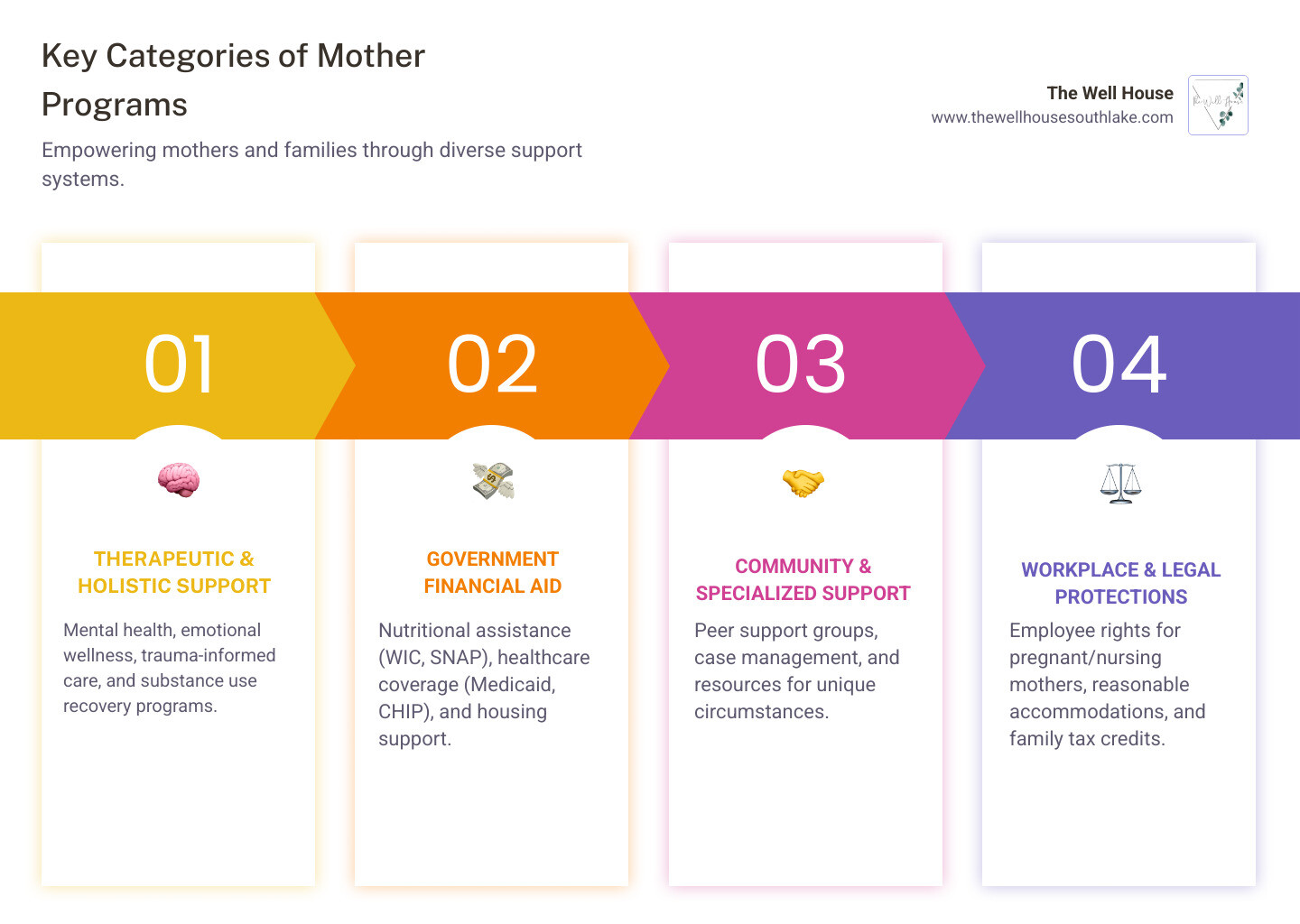
Key Types of Mother Programs:
- Therapeutic Programs – Mental health support, attachment-focused therapy, and trauma-informed care (e.g., Mothering from the Inside Out, MAP: Empowering Moms)
- Government Financial Aid – Nutritional support (WIC, SNAP), healthcare coverage (Medicaid, CHIP), and housing assistance
- Community-Based Programs – Peer support groups, case management, and resources for single mothers and families in crisis
- Workplace Protections – Legal rights for pregnant workers, pumping accommodations, and tax credits
- Digital Support – Apps and online communities offering fitness, education, and postpartum recovery guidance
The reality is that 84 out of 100 children are in Georgia foster care for solvable problems—challenges that could be addressed with the right support. Whether you’re struggling with overwhelming stress, feeling disconnected from your identity, or simply need practical help with food, childcare, or healthcare, these programs exist to meet you where you are.
I’m Jennifer Kruse, a Licensed Professional Counselor Supervisor specializing in women’s issues and motherhood support, and I’ve spent years helping mothers find their path to healing and wholeness through soul-mind-body integration and evidence-based approaches. Throughout my work, I’ve seen how accessing the right mother programs can transform not just a mom’s life, but her entire family’s trajectory.
Similar topics to mother programs:
Therapeutic and Holistic Support for Maternal Well-being
Motherhood is a journey of immense joy, but it also comes with its share of emotional and mental challenges. From navigating postpartum changes to managing the daily demands of family life, a mother’s mental well-being is the bedrock of a thriving household. We understand that taking care of yourself isn’t selfish; it’s essential. This section focuses on mother programs that address the mental and emotional health of mothers, which is foundational to a thriving family.

When we talk about holistic support, we mean addressing the whole person – mind, body, and spirit. This includes mental health support, emotional wellness, and for some, navigating the path of substance use recovery. Programs rooted in attachment theory help us understand the deep bonds between mothers and children, while trauma-informed care acknowledges past experiences that may impact present parenting. For many of us, this journey means coping with motherhood in new and profound ways.
Therapeutic Mother Programs for Mental and Emotional Wellness
One of the most impactful therapeutic mother programs we see is “Mothering from the Inside Out (MIO).” This brief individual parenting intervention was developed as an adjunct to substance use treatment, but its principles extend to any mother seeking to deepen her connection with her child. The primary goals and objectives of MIO address the challenges faced by mothers by focusing on increasing parental reflective functioning. This means helping mothers become more aware of their own thoughts and feelings, especially during stressful interactions, before responding to their child’s emotional states. It’s like putting on your own oxygen mask before helping your child.
MIO encourages caregivers to first make sense of their own strong reactions that might interfere with keeping their child’s emotional needs in mind. This process, known as “mentalizing,” is key. Counselors trained in MIO help mothers engage in this process, making sense of strong emotions that arise during stressful interpersonal interactions. The core components and delivery methods of the MIO intervention emphasize this focus on parental reflective functioning and attachment. It aims to improve caregiving sensitivity, improve parent-child interactions, improve child attachment security, decrease caregiver depression, and decrease caregiver substance use. The intervention is typically delivered individually, either in-person or virtually, over 12 weekly one-hour sessions, building a strong therapeutic relationship as its core. Research, such as that highlighted in the scientific research on MIO’s effectiveness, supports its positive impact on mothers and children.
While specific programs like MAP: Empowering Moms operate in other states, the holistic approach they champion—treating the whole person, addressing physical, emotional, and social needs, and focusing on trauma-informed care—is a model we believe in deeply. We recognize that past experiences can impact your present, and for some, healing may involve addressing a mother wound. These types of mother programs emphasize that by empowering mothers, we strengthen families.
Digital and App-Based Support
In our increasingly connected world, digital mother programs offer flexible and accessible support. The “Momday” app, for instance, is a fantastic resource that supports pregnant and postpartum women through fitness and education. It provides expert-created workouts designed for each phase of pregnancy and postpartum, helping alleviate common aches and pains, ease labor, and promote faster recovery.
Beyond physical fitness, Momday offers educational modules to help you stay informed about your changing body and connect with a community of over 5000 moms. This kind of digital support is invaluable for busy mothers, allowing them to fit self-care into their schedules, whether at home or on the go. Exercise, as promoted by Momday, is not just about physical health; it’s a natural mood booster that can reduce stress, anxiety, and symptoms of depression, offering vital postpartum support: help for depression and anxiety.
Navigating Government and Community Financial Aid
Life’s financial demands can be overwhelming, especially when you’re raising a family. Thankfully, numerous government and community-based mother programs are designed to provide a safety net, ensuring your family has access to basic necessities like nutritious food, healthcare, and stable housing. We believe that understanding these resources is a powerful step towards building a secure future for your children.

These programs offer vital financial assistance, nutrition support, and healthcare coverage, often with eligibility criteria that consider your income and family size. Knowing the application process for each is key to accessing the help you need.
Nutritional Support: WIC and SNAP
The WIC program, officially known as the Special Supplemental Nutrition Program for Women, Infants, and Children, is a cornerstone of nutritional support for families. It provides nutritious foods, information on healthy eating, and referrals for health care. Pregnant women, new mothers, infants, and children up to age five may qualify. WIC benefits are available to women during and after their pregnancy and include crucial breastfeeding support. What’s more, your immigration status does not affect your eligibility to receive WIC benefits. To check if you may be eligible, you can refer to the WIC eligibility requirements.
Another vital program is SNAP, the Supplemental Nutrition Assistance Program. SNAP helps families buy nutritious food with an electronic benefit transfer (EBT) card, similar to a debit card. This program can be a lifeline, helping you and your family eat right when money is tight. Both WIC and SNAP are federal programs, meaning they are available to eligible families right here in Texas.
Healthcare Coverage: Medicaid and CHIP
Access to quality healthcare is non-negotiable for mothers and children. Medicaid and the Children’s Health Insurance Program (CHIP) are essential mother programs that provide comprehensive health coverage. Medicaid can cover women for up to 12 months postpartum in many states, ensuring continuity of care after childbirth. CHIP, on the other hand, provides low-cost health coverage for children in families who earn too much money to qualify for Medicaid but cannot afford private insurance.
Having a baby is a major life event and may qualify you for a special enrollment period if you need to enroll in or change your health plan. Eligibility for these programs is based on income and family size. To learn more or apply, you can find your state Medicaid agency and explore options specific to Texas. For teenagers who are pregnant or new parents, understanding these resources is especially important, and we offer resources like parenting advice for teens to help steer these complex decisions.
Housing and Utility Assistance
A safe and stable home is fundamental to family well-being. Housing assistance mother programs can provide crucial support. While specific programs mentioned in our research operate in other states, federal initiatives like those offered through the Department of Housing and Urban Development (HUD) can help families find housing assistance in their area. We encourage you to explore local HUD resources for Southlake, Westlake, Grapevine, Roanoke, or Trophy Club.
Beyond housing, keeping the lights on and the home warm is a constant concern for many families. The Low-Income Home Energy Assistance Program (LIHEAP) is a federal program that helps eligible low-income households with their energy bills. This can include assistance with heating and cooling costs, energy crisis assistance, and even weatherization and energy-related home repairs. For single mothers navigating these challenges, finding comprehensive support is key, and our guide on single mom therapy: complete guide offers additional resources.
Specialized Mother Programs for Unique Circumstances
Sometimes, mothers face unique challenges that require more targeted support. Whether it’s navigating single parenthood, experiencing homelessness, or needing intensive guidance, specialized mother programs are designed to provide custom assistance. While some specific programs highlighted in our research are state-specific to Georgia or California, the types of support they offer are universally valuable, and similar initiatives often exist in Texas.
These programs often focus on helping mothers achieve self-sufficiency, providing case management, and fostering peer support networks. They recognize that every mother’s journey is unique and sometimes a little extra help can make all the difference.
Community-Based Mother Programs for Self-Sufficiency
Many communities offer programs that cater specifically to single mothers, or grandmothers raising children, focusing on achieving independent, self-sufficient lives. These mother programs often provide a combination of group discussions, peer support, and case management to help identify strategies for positive parenting and self-esteem improvement. They also frequently address the impacts of domestic violence, substance use, and mental health conditions, connecting mothers to vital services like education, counseling, and assistance with essential items.
While specific programs like “Mothers On the Move (MOM)” and the “Resource Mother” program through Planning for Healthy Babies® are impactful initiatives in other states, we encourage mothers in Southlake, Westlake, Grapevine, Roanoke, and Trophy Club to seek out local non-profits and community centers that offer similar comprehensive support. These might include local family resource centers, women’s shelters with transitional programs, or organizations dedicated to empowering single-parent households. Finding peer support can be incredibly validating, and we offer resources like our single mothers counseling: complete guide to help steer this path.
Support for Families in Crisis
Families experiencing homelessness or other crises require immediate and compassionate support. While Compass Family Services, a program highlighted in our research, operates in San Francisco, the critical services it provides—such as emergency housing, childcare support, and job readiness programs—are models for what we hope to see available in all communities, including ours.
When a family faces a crisis, comprehensive support is key. This often includes rapid re-housing initiatives, eviction prevention services, and programs that provide safe shelter. Beyond immediate needs, these mother programs aim to equip parents with the tools for long-term stability, offering job readiness training, skill-building workshops, and connections to employment opportunities. The goal is not just to provide temporary relief but to help families build a stable foundation for the future. If your family is experiencing a crisis, seeking local family counseling services can also provide essential emotional support and guidance. Our family counseling Southlake, TX guide can help you find local resources.
Workplace Protections and Legal Resources for New Moms
Navigating the professional world while pregnant or as a new mother can feel like a delicate balancing act. Understanding your rights and the legal protections in place is crucial for managing this transition, maintaining your career, and ensuring your well-being. We want every mother to feel secure and supported in her workplace.
Federal laws provide significant protections, ensuring reasonable accommodations, the right to pump at work, and safeguards against discrimination. These resources empower mothers to balance their professional aspirations with their family responsibilities. For young adults starting on their careers and considering motherhood, understanding these rights is essential, and our career coaching for young adults can help you plan ahead.
Your Rights as a Pregnant and Nursing Employee
We are fortunate to live in a country where federal laws protect pregnant and nursing workers. The Pregnant Workers Fairness Act, for example, requires employers to provide reasonable accommodations to workers for known limitations related to pregnancy, childbirth, or related medical conditions, unless the accommodation would cause an undue hardship. This could include things like modified work schedules, light duty, or additional breaks.
Similarly, the PUMP for Nursing Mothers Act ensures that most employees have the right to break time to pump and a private place to pump at work. This means you have the right to break time to pump at work for up to one year after your child’s birth, in a space that is not a bathroom and is shielded from view and intrusion. These are not just courtesies; they are your legal protections against discrimination in the workplace based on pregnancy.
Financial Relief and Tax Credits
Beyond direct assistance, several federal financial relief mother programs come in the form of tax credits, designed to ease the financial burden of raising children. The Child Tax Credit helps families with qualifying children get a tax break. You may even be able to claim this credit if you don’t normally file a tax return. This is a significant benefit that can provide much-needed funds for your family. You can find more detailed information on the IRS Child Tax Credit information page.
Additionally, there are other tax credits available, such as the Child and Dependent Care Credit, which helps if you pay someone else to care for your child so you can work or look for work. If you have adopted a child, there’s also an adoption credit that can provide substantial financial relief. Understanding these credits can make a big difference in your family’s budget and help you feel less overwhelmed, especially when you’re already asking what to do when you’re feeling overwhelmed.
Frequently Asked Questions about Mother Programs
What is the main goal of programs like “Mothering from the Inside Out” (MIO)?
MIO is a therapeutic intervention designed to help mothers, particularly those in substance use recovery, improve their parenting by increasing their “parental reflective functioning.” The goal is to help a mother understand her own thoughts and feelings first, which in turn helps her better understand and respond to her child’s needs, strengthening their attachment and bond. This “mentalizing” process helps mothers regulate their own emotions and respond more sensitively to their children, ultimately improving parent-child interactions, child attachment security, and reducing caregiver depression and substance use.
How do I know if I’m eligible for government programs like WIC or Medicaid?
Eligibility for federal mother programs like WIC, SNAP, Medicaid, and CHIP is typically based on income, household size, and specific circumstances (e.g., being pregnant, breastfeeding, or having young children). Each program has its own guidelines, which can also vary slightly by state. The best way to find out if you qualify is to use the official prescreening tools available on government websites or contact your state’s agency directly. Immigration status does not affect WIC eligibility. For Texas residents, you would look for the Texas Health and Human Services Commission (HHSC) for Medicaid/CHIP information, and the Texas WIC program for WIC eligibility.
What kind of support is available for single mothers?
There are many types of mother programs specifically designed to support single mothers, both federally and locally. While specific programs mentioned in our research are in other states, the categories of support are universal. These programs often focus on achieving self-sufficiency through a combination of resources such as financial aid (WIC, SNAP, LIHEAP), housing assistance, childcare support, and job readiness training. Many local non-profit organizations and community centers in areas like Southlake, Westlake, Grapevine, Roanoke, and Trophy Club offer peer support groups, case management, and referrals to help single mothers steer their unique challenges. We encourage you to reach out to local family resource centers or social services for information on available programs in your specific Texas community.
Conclusion
Navigating motherhood comes with a unique set of joys and challenges, but you don’t have to do it alone. The wide array of mother programs available—from therapeutic support to financial aid—are designed to empower you and help your family thrive. Taking the step to seek support is a sign of strength. We hope this guide has shed light on the many avenues of assistance available to you, both federally and through the types of community initiatives you can seek out locally in Texas.
If you’re looking for a collaborative and holistic approach to your mental and emotional well-being on your motherhood journey, the team at The Well House is here to help. Our counselors in Southlake, Westlake, Grapevine, Roanoke, and Trophy Club specialize in supporting mothers through all stages of parenting, offering custom guidance for your mind, body, and spirit. Learn more about our therapy for moms in Southlake, Texas.