

Therapy at Your Fingertips: The Best Online Options for Busy Mothers
Why Motherhood Doesn’t Have to Mean Putting Yourself Last
Online therapy for moms offers accessible mental health support through secure video sessions, flexible scheduling, and specialized maternal mental health expertise—all from the comfort of home, without needing childcare.
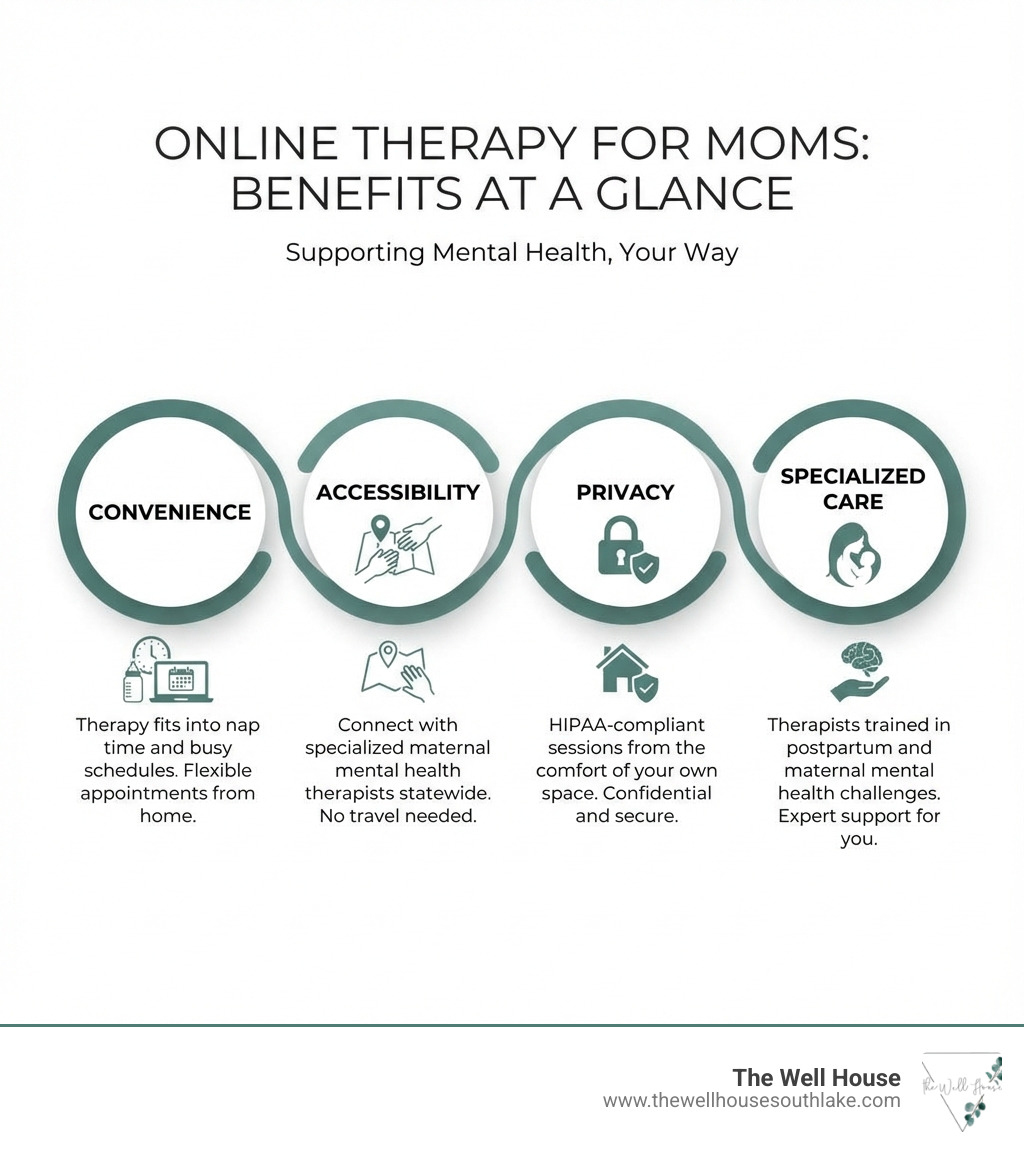
Quick Overview: Top Benefits of Online Therapy for Mothers
- Convenience: Attend sessions during nap time or after bedtime, no travel required
- Accessibility: Connect with specialized maternal mental health therapists statewide
- Privacy: Confidential HIPAA-compliant sessions from your own space
- Specialized Care: Access therapists trained in postpartum depression, anxiety, birth trauma, and maternal identity challenges
- Flexibility: Evening and weekend appointments that fit your unpredictable schedule
Motherhood brings incredible joy—but it also brings challenges that can feel isolating and overwhelming. Between the sleepless nights, constant demands, and pressure to “do it all,” many mothers struggle silently with anxiety, depression, and the loss of their pre-motherhood identity.
The good news? More mothers are prioritizing their mental health than ever before. According to Motherly’s 2023 State of Motherhood survey, 46% of moms sought mental health therapy in the past year, an increase from 43% in 2022. As the stigma around mental health continues to decrease, mothers are recognizing that seeking support isn’t a sign of weakness—it’s an essential part of taking care of yourself and your family.
Online therapy has emerged as a game-changing solution for busy mothers who struggle to find time, energy, or childcare for traditional in-person appointments. Research confirms what many moms already know: psychotherapy delivered remotely is just as effective as care delivered in person. Whether you’re navigating postpartum depression, feeling disconnected from your partner, or simply trying to refind who you are beyond “mom,” online therapy brings professional support directly to you.
I’m Jennifer Kruse, a Licensed Professional Counselor Supervisor in the Dallas-Fort Worth area, and I’ve dedicated my practice to supporting women through the unique challenges of motherhood, including providing online therapy for moms who need flexible, compassionate care. Through soul-mind-body integration and specialized maternal mental health support, I help mothers reconnect with themselves and find balance in this transformative season of life.
Learn more about online therapy for moms:
Why More Moms Are Choosing Online Therapy
Becoming a mother is a profound, life-altering experience. It’s also incredibly demanding, both physically and emotionally. For mothers in our Southlake, Westlake, Grapevine, Roanoke, and Trophy Club communities, finding time for self-care, let alone a therapy appointment, can feel like an impossible feat. This is precisely where online therapy for moms shines, offering a lifeline of support that fits into the unpredictable rhythm of motherhood.

Imagine trying to coordinate an in-person therapy session with a newborn. The unpredictability of feeding schedules, nap times, and your own physical recovery from childbirth can make leaving the house feel like an Olympic event. Online therapy eliminates these logistical problems. We’ve heard countless stories from mothers who appreciate the ability to get support from a maternal mental health specialist at the exact moment they need it most, without the added stress of travel or childcare arrangements.
One of the most significant advantages of online therapy is its unparalleled convenience. We know that as a mother, you’re juggling countless responsibilities. Online therapy means you can attend sessions from the comfort of your home in Southlake, during your baby’s nap time in Grapevine, or even from your car during an older child’s activity in Roanoke. This flexibility is not just a luxury; it’s a necessity for many mothers. It means no more rushing to appointments, no battling traffic, and crucially, no need to arrange or pay for additional childcare. This accessibility helps reduce the financial and logistical barriers that often prevent mothers from seeking the help they deserve.
Beyond mere convenience, online therapy has proven to be incredibly effective. Research from the American Psychological Association (APA) has shown that psychotherapy delivered via phone is just as effective as in-person care. Furthermore, a British study on remote counseling for postpartum depression (PPD) found that women reported better results for depression and anxiety scores both immediately and six months after treatment. The World Journal of Psychiatry has also concluded that there is a large evidence base supporting teletherapy’s effectiveness, making it a reliable option for addressing a wide range of maternal mental health concerns.
Online therapy empowers mothers to prioritize their mental well-being without adding more stress to their already full plates. It offers a safe, accessible, and effective way to connect with a therapist who understands the unique journey of motherhood, right from the comfort of your own space.
Recognizing the Signs: When to Seek Support
Motherhood, while beautiful, can also be incredibly challenging. It’s easy to dismiss persistent feelings of sadness, anxiety, or overwhelm as “just part of being a mom.” However, these feelings can sometimes be signs that you might benefit from professional mental health support. We want every mother in our community to know that it’s okay not to be okay, and recognizing these signs is the first step toward healing.
Approximately 1 in 7 mothers experience postpartum depression and anxiety after giving birth, and this number has unfortunately tripled since the pandemic. Many women experience “baby blues” in the first couple of weeks after childbirth, characterized by mood swings, irritability, and crying spells. But if these feelings persist for longer than two weeks, or if you simply don’t feel like yourself, it’s crucial to reach out.
Here are some common signs that a mother might need to seek professional mental health support:
- Persistent Sadness or Emptiness: Feeling down, depressed, or empty most of the day, nearly every day. This can feel like a fog, making everything seem difficult and dull.
- Overwhelming Anxiety or Worry: Experiencing constant worry, racing thoughts, or a persistent sense of dread. This might manifest as worst-case scenario thinking or a need to control everything around you.
- Feeling Disconnected: Struggling to bond with your baby, feeling emotionally distant from your partner or support system, or isolating yourself from others.
- Mom Rage: Unexplained outbursts of anger or irritability that feel out of proportion to the situation. This can be a surprising and distressing symptom for many mothers.
- Changes in Sleep or Appetite: Significant difficulty sleeping (even when the baby is sleeping), or sleeping too much. Noticeable changes in appetite, either eating much more or much less than usual.
- Loss of Interest or Pleasure: Losing interest in activities you once enjoyed, or having difficulty experiencing joy or happiness.
- Feelings of Guilt, Shame, or Inadequacy: Believing you’re a “bad mom,” feeling guilty about your struggles, or experiencing a profound sense of failure.
- Intrusive Thoughts: Experiencing disturbing or unwanted thoughts, sometimes about harm coming to your baby or yourself. These can be incredibly frightening but are often a symptom of anxiety or PPD, not a sign of your true intentions.
- Hopelessness or Helplessness: Feeling like things will never get better, or that there’s nothing you can do to improve your situation.
These feelings are not your fault, and you are not alone. Seeking help is a sign of strength, not weakness. We are here to support you in navigating these challenging emotions. Learn more about coping with motherhood and finding your path forward.
What Can Online Therapy Help With?
The journey of motherhood is unique for every woman, yet many face similar emotional and psychological problems that online therapy for moms is uniquely equipped to address. At The Well House, we understand that maternal mental health issues are distinct from general anxiety and depression and require specialized, compassionate treatment.
Here’s a closer look at the specific maternal mental health issues that online therapy can effectively treat:
- Postpartum Depression (PPD): Often extending beyond the “baby blues,” PPD is characterized by persistent sadness, irritability, changes in sleep/appetite, and difficulty bonding with your baby. Approximately 1 in 7 mothers experience PPD and anxiety after giving birth. Online therapy provides a safe space to process these feelings, develop coping strategies, and regain a sense of self. Studies indicate that 80 percent of those who receive treatment for PPD see an improvement in their mental health.
- Postpartum Anxiety (PPA): This can manifest as excessive worry, racing thoughts, panic attacks, or a constant feeling of dread. It’s more than just new-parent jitters; it’s an overwhelming sense of fear or unease. Online therapy helps mothers manage these anxious thoughts and develop calming techniques.
- Birth Trauma: For almost half of mothers, their birth experience can be traumatic, leading to symptoms akin to Post-Traumatic Stress Disorder (PTSD), such as flashbacks, nightmares, and avoidance. Online therapy, including modalities like EMDR (Eye Movement Desensitization and Reprocessing), can be incredibly effective in processing these distressing experiences. EMDR therapy has shown to help 84-90% of individuals with a history of trauma recover in as little as 5 hours of treatment.
- Identity Loss (Matrescence): This refers to the profound psychological and emotional change a woman undergoes when she becomes a mother. It can involve a feeling of “losing yourself,” struggling to reconcile your pre-baby identity with your new role. Online therapy helps mothers steer this transition, redefine their identity, and find balance.
- Relationship Strain: The arrival of a baby often puts immense pressure on a couple’s relationship. Changes in intimacy, division of labor, and communication can lead to conflict and disconnection. Online therapy can provide a platform for couples or individuals to address these issues and strengthen their bond as new parents.
- Overwhelm and Burnout: The relentless demands of motherhood can lead to chronic exhaustion, emotional depletion, and a sense of being completely overwhelmed. Therapy can help mothers set boundaries, manage expectations, and develop self-care practices to prevent burnout.
- Mom Rage: This is an intense, often surprising, anger that mothers can feel, triggered by small things. It’s often a sign of underlying stress, exhaustion, or unprocessed emotions. Online therapy provides tools to understand and manage this powerful emotion, helping mothers to soothe their nervous systems and respond more calmly. We offer specialized support for therapy for mom rage.
No matter what challenges you’re facing, we believe you deserve to feel supported and understood. Our collaborative, holistic approach means we look at the whole picture—mind, body, and spirit—to help you heal and thrive. For more comprehensive support, explore our postpartum support for depression and anxiety resources.
Key Features to Look for in Online Therapy for Moms
Choosing the right online therapy for moms can feel like another daunting task on your never-ending to-do list. But finding a therapist who truly “gets it” is paramount to your healing journey. At The Well House, we guide you through this process, emphasizing specific features that make online therapy effective and accessible for mothers in our Southlake, Westlake, Grapevine, Roanoke, and Trophy Club communities.
We believe that every mother deserves care from someone who understands the unique challenges of motherhood. This is why we focus on helping you find the right fit, ensuring your online therapy experience is as supportive and effective as possible. For a broader understanding of your options, consider our ultimate guide to therapy options for moms.
Finding a specialized online therapy for moms
The most crucial aspect of finding effective online therapy is ensuring your therapist specializes in maternal mental health. This isn’t just general therapy; it’s a field that requires specific training and experience.
- Specialized Training and Certification: Look for therapists who have received additional training or experience in working with issues that impact moms, such as birth trauma, feeding struggles, infertility, postpartum depression, postpartum anxiety, matrescence (the transition to motherhood), and adjusting to motherhood. Many highly qualified “mom therapists” or “maternal mental health therapists” will have a PMH-C (Perinatal Mental Health Certification) through Postpartum Support International. This certification signifies a deep understanding of the hormonal changes, psychological shifts, and unique stressors mothers face.
- Trauma-Informed Care: Given that almost half of mothers report their birth experience was traumatic, a trauma-informed approach is essential. This means the therapist understands how trauma impacts the brain and body, and uses compassionate, evidence-based techniques like EMDR to help you process difficult experiences.
- Holistic and Collaborative Approach: We believe in a collaborative, holistic approach that considers your mind, body, and spirit. Your therapist should work with you to explore resources and set goals, empowering you to heal your “inner child” and break negative patterns. Finding a maternal health therapist who embodies these qualities can make all the difference.
Flexible Scheduling and Communication Options
The beauty of online therapy for moms lies in its adaptability to your chaotic schedule.
- Video Sessions: The most common and often preferred method, allowing for visual cues and a stronger connection, much like an in-person session.
- Evening and Weekend Availability: Many online therapists offer expanded hours, understanding that weekdays or traditional business hours are often impossible for mothers. This allows you to schedule sessions during nap times, after bedtime, or on weekends.
- Ease of Booking: User-friendly platforms that allow for easy scheduling, rescheduling, and cancellation (within reasonable policies) are a must.
- Baby-Friendly Sessions: Some therapists are open to you having your baby present during sessions, understanding that sometimes there’s no other option. This can mean feeding your baby or comforting them during your session. We want you to feel comfortable and supported, not stressed about childcare.
Understanding Cost and Insurance for online therapy for moms
Navigating the financial aspects of therapy can be daunting, but it doesn’s have to be.
- Insurance Coverage: Most healthcare insurance plans in Texas now provide coverage for teletherapy similarly to in-office therapy. It’s always best to check with your specific provider about your mental health benefits, including teletherapy coverage, annual limits, and any co-pays.
- Out-of-Network Benefits: If your chosen therapist is out-of-network, inquire about potential reimbursement. Many plans offer partial reimbursement for out-of-network mental health services.
- FSA/HSA Cards: Flexible Spending Accounts (FSA) and Health Savings Accounts (HSA) can typically be used to pay for therapy services, offering a tax-advantaged way to cover costs.
- Private Pay Rates: If insurance isn’t an option, many therapists offer private pay rates. While we do not discuss specific pricing, we encourage you to openly discuss payment options with potential therapists.
Ensuring Privacy and Confidentiality
Your privacy and confidentiality are paramount, especially when discussing sensitive topics from your home.
- HIPAA-Compliant Platforms: Ensure the online therapy platform uses secure, HIPAA-compliant video conferencing technology. This means your data is encrypted and protected, meeting strict federal standards for healthcare privacy.
- Secure Video Conferencing: Platforms should have robust security features to prevent unauthorized access to your sessions.
- Private Space at Home: While the platform handles technical security, you play a role too. Find a room that is quiet and tucked away for your video appointment. If privacy is tricky due to other family members, consider using a noise machine in the hallway or even taking your appointment from a vehicle in your driveway to ensure you can speak openly without interruption or concern.
- Confidentiality Agreements: A professional therapist will always discuss their confidentiality policies with you, outlining the limits of confidentiality (e.g., in cases of harm to self or others).
By considering these features, you can confidently choose an online therapy for moms option that truly meets your needs, providing the support you deserve in a way that works for your unique life.
Essential Resources and Crisis Support for Mothers
While online therapy for moms offers incredible support for navigating the complexities of motherhood, it’s also vital to know where to turn during moments of acute crisis or when you need immediate assistance. We want every mother in our community to feel empowered with these essential resources. You are not alone, and help is always available.
If you or someone you know is experiencing a mental health crisis, please reach out to these confidential resources immediately:
- The National Maternal Mental Health Hotline: 1-833-TLC-MAMA (1-833-852-6262). This hotline offers free, confidential support 24/7 in English and Spanish. It’s specifically designed for pregnant and new moms.
- Postpartum Support International (PSI): 1-800-944-4773 (call or text). PSI provides direct peer support to families, offers resources, and connects you with local support. Available in English and Spanish.
- 988 Suicide & Crisis Lifeline: Call or text 988. This national hotline provides 24/7 free and confidential support for people in distress, prevention and crisis resources for you or your loved ones. Available in English and Spanish.
- National Crisis Text Line: Text HOME to 741741. Connect with a trained crisis counselor for free, 24/7 crisis support via text message.
In addition to these crisis lines, finding a supportive community can be incredibly healing. We encourage you to explore support groups for moms in your local area or online. Sharing experiences with other mothers who understand your journey can foster a sense of belonging and reduce feelings of isolation.
Reaching out for help is a brave and courageous act. Your well-being is important, and there are people ready and waiting to support you through any challenge motherhood may bring.
Frequently Asked Questions
We understand that you might have questions as you consider online therapy for moms. Here, we address some of the most common inquiries to help you feel more confident and informed about this valuable resource.
Is online therapy as effective as in-person therapy for moms?
Yes, overwhelmingly, research indicates that online therapy is just as effective as in-person therapy for a wide range of mental health conditions, including those commonly experienced by mothers like anxiety, trauma, and depression. A British study, for example, showed that women receiving remote counseling for postpartum depression reported better results for depression and anxiety scores immediately after and six months after treatment. The World Journal of Psychiatry has also concluded that there is a large evidence base supporting teletherapy being as effective as in-office therapy.
The key factors for success in therapy often come down to the fit and rapport between you and your therapist, your openness to the process, and the therapist’s training and experience, rather than the mode of delivery. Many clients report feeling just as understood and seen by their therapist online as they do in person, and some even find it easier to open up from the comfort and perceived safety of their own home. Approximately 80% of those who receive treatment for postpartum depression see an improvement in their mental health, regardless of whether it’s online or in-person.
You can dig deeper into the effectiveness of online therapy by reviewing the World Journal of Psychiatry conclusion.
What’s the difference between online therapy, teletherapy, and telemedicine?
These terms are often used interchangeably, but there are subtle distinctions:
- Telemedicine is the broadest term. It refers to the use of telecommunications technology to provide healthcare services remotely. This can include anything from virtual doctor’s appointments for a physical ailment to remote monitoring of chronic conditions.
- Teletherapy is a specific subset of telemedicine. It refers to the delivery of mental health services (such as counseling, psychotherapy, and psychiatric evaluations) remotely, typically via video conferencing or phone calls.
- Online therapy is essentially another term for teletherapy. It specifically emphasizes the use of internet-based platforms to conduct therapy sessions.
In the context of maternal mental health, when we talk about online therapy for moms, we are generally referring to teletherapy—mental health support delivered conveniently and securely through digital means.
How can I find time for therapy with a newborn?
This is a question we hear often, and it’s a completely valid concern! The beauty of online therapy is its built-in flexibility, which directly addresses the time constraints of new motherhood:
- No Travel Time: One of the biggest time-savers is eliminating the need to commute to and from an office. Those extra 30-60 minutes can be invaluable for a new mom.
- Schedule During Nap Times: Many mothers find they can schedule their sessions during their baby’s longer naps, especially if they have a quiet space at home.
- Evening and Weekend Options: Many online therapists offer appointments outside of traditional 9-5 hours, making it possible to have a session after your partner is home or on a weekend.
- Baby Can Be Present: For some therapists, it’s perfectly acceptable to have your baby present during the session. We understand that feeding, comforting, or simply having your baby nearby might be necessary, and a good maternal mental health therapist will accommodate this without judgment.
- Shorter Sessions: While standard sessions are often 50 minutes, some therapists may offer shorter check-in options if that better suits your current capacity.
The goal of online therapy for moms is to make support accessible. We work with you to find a schedule and setup that minimizes stress and maximizes your ability to engage in your healing journey.
Take the Next Step Towards Your Emotional Wellness
Motherhood is an incredible journey, but it doesn’t mean you have to sacrifice your own well-being. We understand that life as a mother can feel out of control at times, filled with unexpected challenges and immense pressure. But you are already a good mom, and therapy can help you truly feel like it. You deserve to feel good, to find your balance, and to refind the vibrant woman you are beyond your role as a mother.
Online therapy for moms has revolutionized how mothers can access the support they need, offering unparalleled convenience, accessibility, and specialized care right from your home in Southlake, Westlake, Grapevine, Roanoke, or Trophy Club. You don’t have to stay stuck in overwhelm, anxiety, or sadness. With the right support, you can learn to breathe, find joy, and truly enjoy this precious season of your life.
At The Well House, we offer a collaborative, holistic approach with diverse counselors specializing in mind, body, and spirit wellness, including telehealth options custom specifically for mothers. We are here to partner with you on your journey towards emotional wellness, helping you steer the unique challenges of motherhood with strength and resilience.
If you’re ready to take the next step towards feeling more like yourself and finding peace amidst the beautiful chaos of motherhood, we are here for you.
Learn more about mom therapy for when life is out of control