

Stage Fright No More: Effective Strategies for Managing Performance Anxiety
Why Performance Anxiety Counseling Matters for Your Well-Being
Performance anxiety counseling is a specialized form of therapy that helps individuals overcome intense fear related to performing in front of others—whether that’s public speaking, work presentations, artistic performances, or athletic competitions. Through evidence-based approaches like Cognitive Behavioral Therapy (CBT), Acceptance and Commitment Therapy (ACT), and mindfulness, counseling provides practical tools to challenge negative thoughts, manage physical symptoms, and face feared situations with confidence.
Key components of performance anxiety counseling include:
- Identifying and reframing negative thought patterns
- Learning relaxation and coping skills for physical and mental symptoms
- Gradual exposure to build confidence in feared situations
- Addressing underlying causes like perfectionism or past negative experiences
- Building long-term resilience through new habits and practices
Imagine standing at the edge of a stage, heart pounding, palms sweating, and mind blank. You’re convinced you’ll fail before you even begin. This is performance anxiety, and it’s far more common than you might think.
An estimated 2% of the U.S. population experiences debilitating performance anxiety. Among athletes, up to 60% report sports performance anxiety. And fear of public speaking? It’s one of the most common fears in America.
The good news is this: performance anxiety is highly treatable. You don’t have to live with the crushing pressure or the constant worry. With the right support, you can learn to manage your anxiety, challenge your inner critic, and step into those moments with greater ease.
This article will walk you through what performance anxiety is, how it differs from other anxiety disorders, the most effective therapeutic approaches, and practical techniques you can start using today. We’ll also explore when it’s time to seek professional help and what to expect from counseling.
I’m Jennifer Kruse, a Licensed Professional Counselor Supervisor (LPC-S) in the Dallas-Fort Worth area with over 14 years of experience helping people overcome anxiety. Through my holistic, soul-mind-body approach, I’ve guided many clients through performance anxiety counseling, helping them find inner strength and build lasting tools for success. My goal is to walk with you on your journey to healing from stress, anxiety, or the pressure to be perfect.
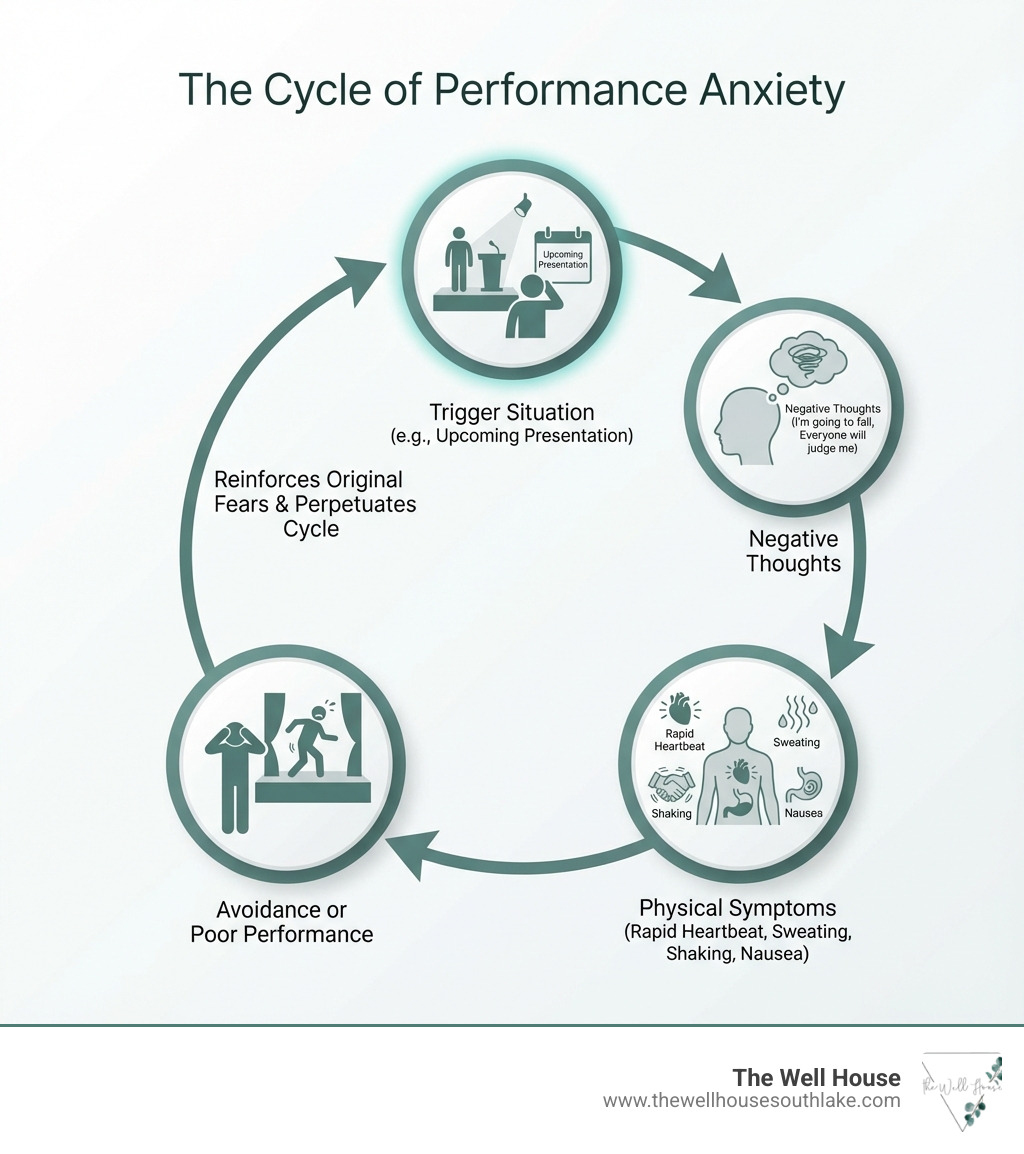
Basic performance anxiety counseling terms:
Understanding Performance Anxiety: Symptoms, Causes, and Types
Performance anxiety is a specific type of anxiety that arises when an individual feels pressured to perform well in front of others. It’s not just “stage fright”; it’s a dynamic that can impact us on physical, cognitive, and behavioral levels. When we experience performance anxiety, our skills can sometimes diminish, leading to what’s often called “choking” under pressure.

The Common Symptoms of Performance Anxiety
Performance anxiety manifests in various ways. Recognizing these symptoms is the first step toward managing them.
Physical Symptoms: These are our body’s “fight or flight” response. They can include a rapid heartbeat, sweaty palms, shaking, dry mouth, upset stomach, dizziness, and muscle tension.
Cognitive Symptoms: These are the mental aspects of anxiety. They often involve negative self-talk (“I’m going to fail”), your mind going blank, catastrophizing, difficulty concentrating, and feelings of inadequacy.
Behavioral Symptoms: These are the actions we take due to anxiety. They include avoiding triggering situations, underperforming or “choking,” procrastination, and restlessness.
Some nervousness is normal. It’s when these symptoms become overwhelming and interfere with our lives that they signal a need for support.
Underlying Causes and Roots
The roots of performance anxiety are often multifaceted. Understanding them can help us address the core issues in performance anxiety counseling.
- Fear of Failure: We often tie our self-worth to our performance, so the idea of not meeting expectations can be terrifying.
- Unrealistic Expectations (Perfectionism): Striving for perfection creates immense pressure and self-judgment.
- Past Negative Experiences: A previous bad experience can create a lasting fear of it happening again.
- Lack of Confidence: Lacking belief in our own abilities can lead to self-doubt.
- Biological Factors: Some individuals may be predisposed to anxiety due to genetics or brain chemistry.
At The Well House, we accept a holistic mental health approach, recognizing that these factors are interconnected.
Different Types of Performance Anxiety
While the core feelings are similar, performance anxiety can manifest in various contexts:
- Public Speaking Anxiety: Dread of being judged or making mistakes in front of an audience.
- Test Anxiety: Intense worry or mind blanks during exams, despite preparation.
- Sports Performance Anxiety: Athletes facing immense pressure, leading to “choking.” Up to 60% of athletes experience this.
- Stage Fright (for musicians/actors): Significant nervousness impacting artistic expression. Approximately 6% of orchestral musicians use alcohol before a performance to cope.
- Professional Performance Anxiety: Anxiety around job interviews, presentations, or high-stakes meetings. Our mental health for professionals services often address this.
Role of Parents and Coaches: For young athletes, parents and coaches play a crucial role. Unintentional pressure can exacerbate a child’s performance anxiety. Encouraging a focus on effort over outcome and teaching coping strategies can significantly help.
Performance Anxiety vs. Other Anxiety Disorders
It’s easy to confuse performance anxiety with other anxiety disorders, as they share common symptoms. However, understanding the distinctions is crucial for effective treatment.
| Feature | Performance Anxiety | Social Anxiety Disorder (Social Phobia) | Generalized Anxiety Disorder (GAD) |
|---|---|---|---|
| Triggers | Specific performance situations (e.g., public speaking, exams, sports, artistic performance, job interviews). | Broad range of social situations (e.g., meeting new people, eating in public, being observed, conversations). | Diverse, everyday concerns (e.g., health, finances, work, family, minor matters), often without specific triggers. |
| Duration of Anxiety | Acute, peaks before or during the performance event. | Persistent fear or anxiety in social situations, lasting for months or longer. | Chronic, excessive worry lasting at least six months, often present most days. |
| Core Fear | Fear of failure, making mistakes, or underperforming in a specific task, leading to negative evaluation. | Fear of negative judgment, humiliation, embarrassment, or being scrutinized by others in social contexts. | Persistent, uncontrollable worry about various aspects of life, often with a feeling of dread or unease. |
| Situational vs. Pervasive | Highly situational; anxiety is primarily tied to specific performance events. | Pervasive across many social situations; anxiety is about the social interaction itself. | Pervasive across multiple aspects of life; anxiety is not confined to specific events or social interactions. |
| Impact | Avoidance of performance opportunities, “choking” during performances. | Avoidance of social interactions, withdrawal, difficulty forming relationships. | Restlessness, fatigue, difficulty concentrating, irritability, muscle tension, sleep disturbances. |
While performance anxiety is distinct, it can sometimes co-occur with other anxiety disorders. About one-third of individuals with performance anxiety have psychiatric comorbidities, most commonly other anxiety disorders like social phobia or GAD. For more general information on anxiety, you can refer to MedlinePlus Health Information.
How Performance Anxiety Counseling Can Help You Regain Confidence
If you’re struggling with performance anxiety, you don’t have to face it alone. Performance anxiety counseling offers a supportive path to regaining your confidence. We believe in a collaborative approach, working alongside you to build resilience.
In counseling, we establish a strong therapeutic alliance built on trust. We’ll develop a personalized treatment plan for your unique goals, drawing on evidence-based approaches to equip you with practical skills. Our collaborative counseling in Southlake TX emphasizes this partnership, ensuring you feel supported.
Cognitive Behavioral Therapy (CBT) for Performance Anxiety Counseling
Cognitive Behavioral Therapy (CBT) is one of the most effective approaches for performance anxiety. The core idea is that our thoughts, feelings, and behaviors are interconnected. By changing unhelpful thought patterns and behaviors, we can change how we feel.
In CBT for performance anxiety, we focus on:
- Identifying Negative Thoughts: Pinpointing the specific thoughts that fuel your anxiety.
- Challenging Cognitive Distortions: Learning to question the validity of negative thoughts and find a more balanced perspective.
- Behavioral Experiments: Gradually testing your anxious predictions in real-life situations to build new, positive experiences.
- Exposure Therapy: Systematically exposing yourself to anxiety-provoking situations in a controlled way, which helps anxiety naturally decrease over time.
- Building Coping Skills: Equipping you with practical strategies to manage anxiety in the moment.
You can find more insights into cognitive therapy for performance anxiety in this research.
Acceptance, Mindfulness, and EMDR Therapies
Beyond CBT, other powerful therapeutic approaches can significantly help in performance anxiety counseling:
- Acceptance and Commitment Therapy (ACT): ACT focuses on accepting anxious thoughts rather than eliminating them. The goal is to live a meaningful life despite anxiety by committing to actions aligned with your values. A 2017 study showed ACT significantly reduced performance anxiety in music students.
- Mindfulness-Based Stress Reduction (MBSR): Mindfulness involves bringing non-judgmental attention to the present moment. Practices like meditation help us respond to anxiety with greater calm and clarity.
- EMDR (Eye Movement Desensitization and Reprocessing): If your anxiety stems from past trauma, EMDR can be highly effective. It helps process disturbing memories, reducing their emotional charge. We offer EMDR for Peak Performance to help individuals overcome mental blocks.
The Role of Medication in Treatment
For some, medication can be a helpful adjunct to performance anxiety counseling, especially when symptoms are severe. It is a tool to manage symptoms while you engage in therapy to address the underlying issues.
- Benefits: Medication can provide quick relief for acute physical symptoms (e.g., racing heart, trembling) and may make it easier to participate in therapy.
- Drawbacks: All medication use for performance anxiety is “off-label.” There is a potential for side effects, dependency, and withdrawal. Symptoms may return after discontinuing medication if underlying patterns haven’t been addressed in therapy.
- Common Medications:
- Beta-blockers (e.g., Propranolol): Often used situationally before a performance, they block the physical effects of adrenaline, like a rapid heart rate and trembling.
- Benzodiazepines (e.g., Clonazepam, Lorazepam): These anti-anxiety medications can reduce anxiety but carry risks of sedation and dependence, so they should be used cautiously.
Any decision regarding medication should be made in consultation with a medical doctor. Our counselors can collaborate with your prescribing physician to ensure a comprehensive treatment approach.
Practical Strategies to Manage Anxiety in the Moment
While performance anxiety counseling provides long-term solutions, there are many practical strategies to manage anxiety when it strikes. These self-help techniques, practiced regularly, can build resilience and help you steer challenging situations. For a more comprehensive guide on managing stress, you can explore our therapy for stress complete guide.
Reframing Your Inner Critic
Many of us have a harsh inner critic that undermines our confidence. Managing this negative self-talk is crucial.
- Challenge the ‘Coach in Your Head’: When a negative thought arises, ask: Is this helpful? Is it based on fact or fear?
- Use Positive Self-Talk: Replace negative thoughts with realistic, positive affirmations. Instead of “I’m going to fail,” try “I’ve prepared for this, and I can do my best.”
- Practice Self-Compassion: Treat yourself with the same kindness you would offer a friend.
- Focus on Process Over Outcome: Shift your attention from the end result to the steps you can control in the moment.
- Set Realistic Expectations: Aim for competence and improvement, not flawlessness.
Relaxation and Grounding Techniques
These techniques can calm your nervous system and bring you back to the present moment.
- Deep Breathing Exercises: Slow, deep breaths counteract the “fight or flight” response.
- Anchor Breathing: This simple meditation encourages calm and relaxation. Find a guide here: Anchor Breathing technique.
- Square Breathing (Box Breathing): Ideal before a performance, this technique reduces anxiety. Learn it here: Square Breathing exercise.
- Visualization: Vividly imagine yourself successfully performing the task, feeling calm and confident.
- Grounding and Centering Exercises: These techniques help you feel more present and focused. Explore them here: Grounding and Centering exercises.
The Impact of Lifestyle Changes
Our daily habits significantly influence our ability to manage anxiety.
- Sleep: Aim for 7-9 hours of quality sleep, as lack of it can worsen anxiety.
- Balanced Diet: Fuel your body with nutritious foods and avoid excessive sugar.
- Regular Exercise: Physical activity is a powerful stress reducer and mood booster.
- Limit Caffeine and Alcohol: Both can worsen anxiety symptoms.
- Building a Calming Routine: Incorporate daily practices like mindfulness or journaling to reduce overall stress.
Taking the Next Step: When and How to Get Help
It’s natural to experience some nervousness, but when performance anxiety becomes debilitating, professional support can make a profound difference. We often see young professionals facing immense pressure, and our therapy for young professionals is designed to address these challenges.
Signs You May Need Treatment for Performance Anxiety
Knowing when to seek help is crucial. Consider reaching out for performance anxiety counseling if:
- Anxiety is Overwhelming: It feels uncontrollable, leading to panic or extreme distress.
- Self-Help Isn’t Enough: You’ve tried various strategies without significant relief.
- Avoiding Important Life Events: You’re turning down opportunities or promotions because of your fear. An estimated 2% of the U.S. population has debilitating performance anxiety.
- Significant Distress: Your anxiety causes considerable emotional suffering and impacts your quality of life.
- Physical Symptoms are Severe: You experience intense physical symptoms like vomiting or dizziness that interfere with your ability to function.
Seeking help is a sign of strength, not weakness.
What to Expect from Performance Anxiety Counseling
When you begin performance anxiety counseling with us, here’s what you can generally expect:
- Initial Assessment: We’ll start with a comprehensive assessment to understand your unique experiences and tailor a treatment plan for you.
- Collaborative Goal-Setting: We’ll work together to establish clear, achievable goals for therapy.
- Learning New Skills: You’ll learn evidence-based techniques (like CBT and ACT) to manage your thoughts, emotions, and behaviors.
- A Safe, Non-Judgmental Space: Our counselors provide a supportive and confidential environment to explore your fears.
- Homework and Practice: We’ll encourage you to practice new skills in your daily life to build confidence.
- Online Counseling Options: For your convenience, we offer online counseling and therapy services in Southlake, Westlake, Grapevine, Roanoke, or Trophy Club, TX.
Frequently Asked Questions about Performance Anxiety
How long does therapy for performance anxiety take?
The duration of performance anxiety counseling varies. Many people see improvements in a few weeks, while approaches like CBT often take 12 to 20 sessions for sustained relief. Our focus is on equipping you with long-term skills for lasting resilience.
Is a little bit of performance anxiety normal?
Absolutely! A little anxiety is normal and can even be motivating. This feeling, sometimes called “optimal arousal,” can sharpen your focus. It only becomes a problem when it’s excessive and impairs your performance or quality of life.
Can performance anxiety be cured completely?
While a “cure” isn’t the goal, performance anxiety is highly manageable. Counseling aims to reduce debilitating symptoms and build robust coping skills, not eliminate all nervousness. You can learn to perform effectively despite feeling some nerves, ultimately gaining confidence and resilience. Many people even learn to transform their anxiety into fuel for stronger performances.
Conclusion
Performance anxiety is a common challenge, but it doesn’t have to dictate your life. As we’ve explored, it’s a complex experience with physical, cognitive, and behavioral symptoms, stemming from various roots like fear of failure and perfectionism. However, with the right strategies and support, you can learn to manage your fears and thrive.
Through performance anxiety counseling with evidence-based approaches like CBT, ACT, and mindfulness, you can reframe your inner critic, master relaxation techniques, and make lifestyle changes that support your mental well-being. Recognizing when to seek professional help is a powerful step towards reclaiming your confidence and living a life where you accept opportunities rather than avoid them.
At The Well House, we offer a collaborative, holistic approach to help you build confidence and resilience. We understand the unique pressures you face, whether you’re a student, a professional, or an athlete in Southlake, Westlake, Grapevine, Roanoke, or Trophy Club, TX. We’re here to walk alongside you on your journey to overcoming stage fright and stepping into your full potential.
Take the first step towards a calmer, more confident you. Find out more about our young adult therapy services in Southlake, TX and let us help you transform your performance anxiety into a source of strength.