

Unlocking Connection: Benefits of Group Therapy for Young Adults
Why Young Adults Are Turning to Group Therapy
Young adult group therapy is a form of treatment where a small group of people (typically 6-12) meet regularly with a trained therapist to discuss their experiences, challenges, and emotions in a safe, confidential environment. Unlike individual therapy, group therapy allows participants to learn from each other’s perspectives, practice social skills, and realize they’re not alone in their struggles.
Key Benefits of Young Adult Group Therapy:
- Reduces isolation – Connect with peers facing similar challenges
- Develops social skills – Practice communication and boundaries in real-time
- Builds coping strategies – Learn from others’ experiences and successes
- More affordable – Typically costs less than individual therapy sessions
- Creates community – Foster lasting relationships and peer support
- Increases self-awareness – See yourself reflected in others’ stories
Young adulthood can feel incredibly isolating. You’re navigating major life transitions—college, career, relationships, independence—while managing stress, anxiety, or other mental health concerns. One member of a group therapy session shared: “For the first time, I felt truly understood by people who weren’t judging me.”
That’s the power of young adult group therapy. It offers something individual counseling can’t—the lived experience of peers who get it.
Research consistently shows that group therapy is as effective as individual therapy for conditions like depression, anxiety, and PTSD. The American Psychological Association confirms that decades of clinical trials support this finding. What makes group therapy uniquely powerful are the therapeutic factors that only emerge in a group setting: universality (you’re not alone), hope (witnessing others’ progress), and altruism (helping others helps you heal).
As Jennifer Kruse, a Licensed Professional Counselor Supervisor with expertise in guiding young adults through life transitions, I’ve witnessed how young adult group therapy creates transformative connections that accelerate healing and growth. My holistic, soul-mind-body approach helps clients find their inner strengths while building meaningful community support.
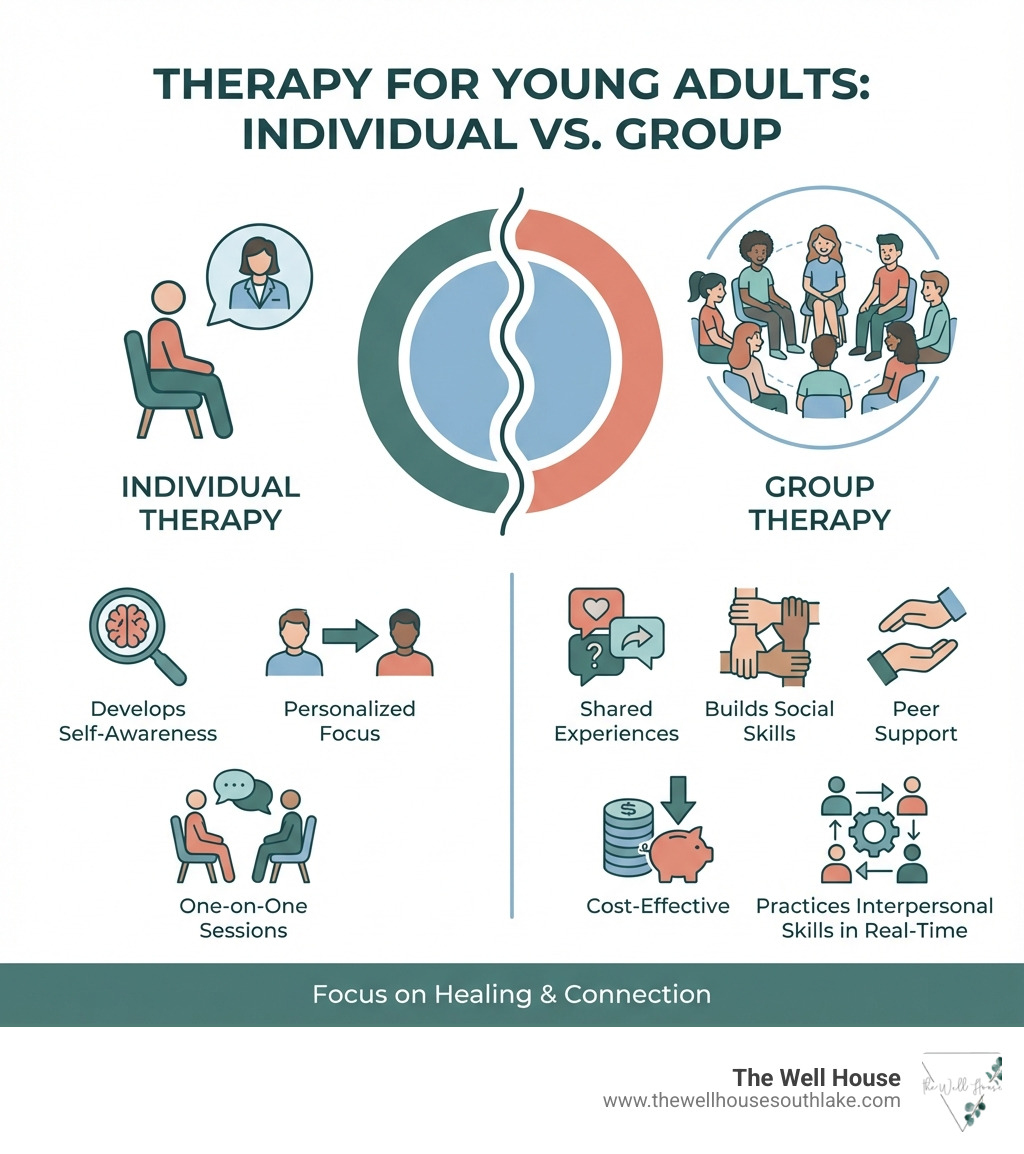
Young adult group therapy terms to know:
What is Group Therapy and How Does It Work?
At its core, group therapy is a form of psychotherapy where a small gathering of individuals, typically ranging from 6 to 12 members, meets regularly with one or more trained therapists. These sessions are designed to facilitate discussion on a specific clinical topic, an area of skill development, or a broader therapeutic focus. Imagine it as a dedicated space where you can explore your thoughts and feelings, hear from others, and grow in a supportive environment.
Our sessions commonly meet for an hour to two weekly, though the exact size and duration can vary based on the specific needs of the group and its members. A key aspect of young adult group therapy is the establishment of a safe, confidential environment. This means that what is shared within the group stays within the group, fostering a level of trust that encourages open and honest communication. This structured yet flexible setting, guided by a professional facilitator, allows for shared experiences and collective learning.
Group therapy is a vital aspect of mental health treatment, offering a unique dynamic that complements or sometimes even surpasses individual therapy for specific goals. For young adults navigating complex life stages, it provides a powerful platform for healing and development. To explore more about how we support young adults, visit our page on Young Adult Therapy in Southlake, TX.
The Unique Power of Shared Experience
One of the most profound aspects of young adult group therapy is the realization that you are truly “not alone.” The feeling of isolation is pervasive, especially during young adulthood when many are struggling with new challenges and identities. Bringing individuals together in a group setting fosters connection, shared experience, and camaraderie. As one participant eloquently put it, “Some of the most comforting words in the universe are ‘me too.'” This “universality” is a powerful therapeutic factor, normalizing struggles and reducing the stigma often associated with mental health challenges.
In this collective space, members gain perspective by hearing how others steer similar difficulties. This shared wisdom often provides fresh insights and alternative coping strategies. We’ve seen countless times how individuals benefit not just from receiving support, but also from offering it. This “altruism,” the act of helping others, can be incredibly empowering and contribute significantly to one’s own healing journey. The group becomes a living, breathing laboratory where you can experiment with new ways of relating and receive immediate, constructive feedback from peers who genuinely understand.
How It Differs from One-on-One Counseling
While individual therapy offers a deeply personalized, one-on-one focus, young adult group therapy provides distinct advantages that can’t be replicated in a solo setting. The most obvious difference lies in the group dynamics. In a group, you’re not just interacting with a therapist; you’re engaging with several peers, which creates a microcosm of the outside world. This allows for “interpersonal practice” in real-time, helping you develop and refine crucial social skills. Whether it’s learning to communicate more effectively, setting boundaries, or navigating conflict, the group offers a safe space to try out new behaviors.
Research consistently shows that group therapy is as effective as individual therapy for many conditions, including depression, anxiety, and social anxiety. What makes it uniquely powerful for young adults is the built-in peer feedback and multiple perspectives on your situations. Imagine struggling with a tough decision and getting insights from several people, not just one. This collective wisdom can be incredibly enriching. Plus, group counseling is often a more cost-effective way to access mental health support, making it more accessible for many.
The therapist’s role in a group setting shifts from solely directing to facilitating and guiding. They act as a conductor, ensuring everyone has a voice, managing group dynamics, and gently nudging discussions toward therapeutic goals. Learning to steer these group dynamics can improve social skills that are directly applicable outside of therapy, enriching your relationships and interactions in all areas of life. To learn more about how we support young adults through various counseling formats, visit our page on Counseling for Young Adults.
The Core Benefits of Young Adult Group Therapy

When we consider young adult group therapy, we’re often talking about a holistic approach to growth. It’s not just about addressing a problem; it’s about building a foundation for a fulfilling life. The benefits extend far beyond the session room, impacting daily interactions, self-perception, and overall well-being.
Here are some of the key benefits we see young adults gain:
- Fostering Community and Reducing Isolation: Young adulthood can be a period of intense change, and with it, often comes profound loneliness. Group therapy provides a powerful antidote to this by creating a sense of belonging and camaraderie.
- Developing Essential Life and Coping Skills: From effective communication to emotional regulation, groups offer a practical “laboratory” for honing the skills needed to thrive.
- Improved Self-Awareness: Through the eyes of others, young adults gain deeper insights into their own behaviors, thought patterns, and impact on others.
- Installation of Hope: Witnessing peers make progress and overcome challenges can be a powerful source of inspiration and belief in one’s own capacity for change.
- Improved Social Skills: The group setting is an ideal place to practice social interactions, receive feedback, and build confidence in relating to others.
- Validation and Normalization: Hearing “me too” from others facing similar struggles reduces feelings of shame and makes individuals feel less alone.
- Cost-Effectiveness: Group therapy is often a more accessible option financially, making vital mental health support available to more young adults.
Fostering Community and Reducing Isolation
The powerful sense of collective support found in young adult group therapy is truly remarkable. In a world that often emphasizes individual achievement, it’s easy for young adults to feel isolated, especially when struggling with mental health challenges or difficult life transitions. Group therapy actively combats this pervasive feeling of loneliness by fostering connection, shared experience, and camaraderie.
Imagine stepping into a room where everyone understands what you’re going through, without you having to explain every detail. This shared identity and common understanding create a powerful bond, reducing feelings of isolation and building a strong sense of belonging. We’ve observed that this “group cohesion” acts like an invisible glue, holding everything together and creating a foundation of trust. It’s a place where you can forge genuine peer relationships, practice vulnerability, and realize that your struggles, while unique to you, are also part of a larger human experience. This natural reduction of stigma within the group setting allows for deeper healing. If you or someone you know struggles with social situations, our resources on Social Anxiety in Young Adults might be helpful.
Developing Essential Life and Coping Skills
Young adult group therapy is an exceptional training ground for developing practical life and coping skills that resonate far beyond the therapy room. It’s one thing to learn about these skills in theory; it’s another to practice them in a live, supportive environment.
Within the group, you’ll have opportunities to:
- Practice Communication: From assertive communication to active listening, group sessions provide a safe space to refine how you express yourself and understand others.
- Set Boundaries: Learning to establish and maintain healthy boundaries is crucial for young adults. The group offers a chance to practice this vital skill and receive feedback on your approach.
- Regulate Emotions: Many young adults struggle with intense emotions. Group therapy can teach techniques for emotional regulation, helping you manage feelings like anxiety, sadness, or anger more effectively. We use evidence-based approaches like Dialectical Behavior Therapy (DBT), which teaches skills in Mindfulness, Interpersonal Effectiveness, Emotion Regulation, and Distress Tolerance.
- Manage Stress: Observing how peers cope with stress and sharing your own strategies can expand your “coping toolbox.” A young adult learns new ways to manage stress by observing and adopting techniques shared by other group members.
- Problem-Solve: Group members often bring real-life dilemmas to the table, and together, with the guidance of the therapist, you can brainstorm solutions and practice problem-solving in a collaborative setting.
- Receive Feedback: Getting honest, constructive feedback from peers can be incredibly insightful, providing perspectives that you might not get in individual settings.
By learning to steer group dynamics and practicing these skills, young adults improve their social competencies, which are directly applicable to their relationships, academic pursuits, and professional lives. For more insights into managing daily pressures, consider exploring our resources on Stress Management for Young Adults.
Navigating Common Challenges: What Can Group Therapy Help With?
Young adulthood is a dynamic period marked by significant personal growth and external pressures. From the excitement of new beginnings to the uncertainty of future paths, it’s a time when many young adults face a myriad of challenges. Young adult group therapy offers a powerful and supportive environment to steer these complexities, fostering resilience and equipping individuals with the tools to thrive.

Whether it’s the academic demands of college, the daunting task of launching a career, the intricacies of new relationships, or the deeper journey of identity exploration, group therapy can provide a space for shared understanding and growth. It’s where you can discuss everything from managing college stress to understanding family dynamics, all while building self-esteem and confidence.
Mental Health Conditions
One of the most significant areas where young adult group therapy shines is in addressing various mental health conditions. Numerous peer-reviewed studies have consistently shown the benefits and effectiveness of group therapy for a wide range of issues. We’ve seen it make a profound difference for young adults struggling with:
- Anxiety: Whether it’s generalized anxiety, social anxiety, or panic disorders, group therapy provides a safe space to practice coping mechanisms and interpersonal skills. Research supports its effectiveness for anxiety.
- Depression: Group settings can combat the isolation often felt with depression, offering validation and shared strategies for managing symptoms. The effectiveness for depression is well-documented.
- Substance Use Disorders: Group psychotherapy is a vital aspect of substance use recovery, focusing on developing coping skills, preventing relapse, and building a life without substance use. It’s proven effective for substance use disorders.
- Eating Disorders: The supportive and validating environment of group therapy can be crucial for individuals working through complex issues related to body image and disordered eating. Studies highlight its benefits for eating disorders.
- PTSD: For those who have experienced trauma, group therapy can offer a collective healing space, reducing feelings of isolation and fostering connection. Research supports its efficacy for PTSD.
- ADHD: Groups can help young adults with ADHD develop organizational skills, improve focus, and manage associated anxieties.
Many group programs are specifically designed to address these conditions, often incorporating evidence-based therapeutic approaches like Cognitive Behavioral Therapy (CBT) or Dialectical Behavior Therapy (DBT).
Transitional and Developmental Problems
Beyond specific mental health diagnoses, young adulthood is a period packed with “transitional and developmental problems” that young adult group therapy is uniquely suited to address. This stage, roughly ages 18-30, is characterized by significant changes that can often feel overwhelming.
We frequently see young adults seeking support for challenges such as:
- Academic Pressure: The demands of college or graduate school can be intense, leading to stress and burnout. Group therapy can help with stress management, time organization, and coping strategies for academic success. For custom support, explore our Academic Coaching When School Is Too Much services.
- Career Path Decisions: The uncertainty of career choices, job searching, and entering the professional world can be a major source of anxiety. Groups can provide a space to explore aspirations, build confidence, and share job-hunting strategies. Our Career Counseling for Young Adults can also offer specialized guidance.
- Building Independence: Moving away from home, managing finances, and navigating adult responsibilities can be a steep learning curve. Group therapy fosters self-reliance and teaches practical life skills.
- Forming Healthy Relationships: This period is crucial for establishing mature friendships and romantic relationships. Group therapy offers a real-time laboratory to practice communication, boundary-setting, and understanding interpersonal dynamics.
- Identity Exploration: Finding who you are, your values, and your place in the world is a core developmental task of emerging adulthood. Groups provide a supportive space for this self-findy.
Programs like “Emerging Adults CBT Group” are specifically custom for individuals aged 18-28 struggling with these developmental milestones, offering support for everything from completing college to maintaining employment and self-care. It’s a time of immense growth, and we believe in providing comprehensive support for every step of this journey. Learn more about how we support this unique stage on our Therapy for Emerging Adults page.
Types of Groups and Therapeutic Approaches
Understanding the different types of young adult group therapy available can help you find the best fit for your needs. Not all groups are created equal, and their goals, structure, and the therapist’s role can vary significantly. This diversity allows us to tailor support precisely to what young adults require.
| Group Type | Primary Goal | Structure “`
The user wants to write a comprehensive article about young adult group therapy, covering all the specified questions and topics. I need to ensure I use all relevant research, apply the geographic filter, and incorporate the specified tone and graphics. The intro is provided, so I’ll start from there.
Let’s start drafting the article, section by section.
Word count management: I need to keep an eye on the word count as I write, aiming for ~2500 words. I’ll break down the content for each section to ensure thorough coverage without excessive verbosity.
Geographic Filter: I will explicitly mention The Well House locations (Southlake, Westlake, Grapevine, Roanoke, Trophy Club, TX) where relevant and filter out any research content that refers to other locations like New York, Palo Alto, Austin, etc.
Graphics: I will place the graphics as specified in the outline.
Q&A format within outline: I will rephrase the H2 and H3 as questions or integrate the answers to the key questions naturally within the subsections. For instance, “What is Group Therapy and How Does It Work?” is a direct question from the prompt, so I’ll address it in that H2 section.
Tone and Voice: Simple, clear, warm, empathetic, and occasionally humorous. First-person plural (“we,” “our”).
Keywords: Ensure “young adult group therapy” is naturally integrated and bolded where appropriate.