

Beyond the Blues: Supporting Young Adult Mental Health
The Silent Struggle of a Generation
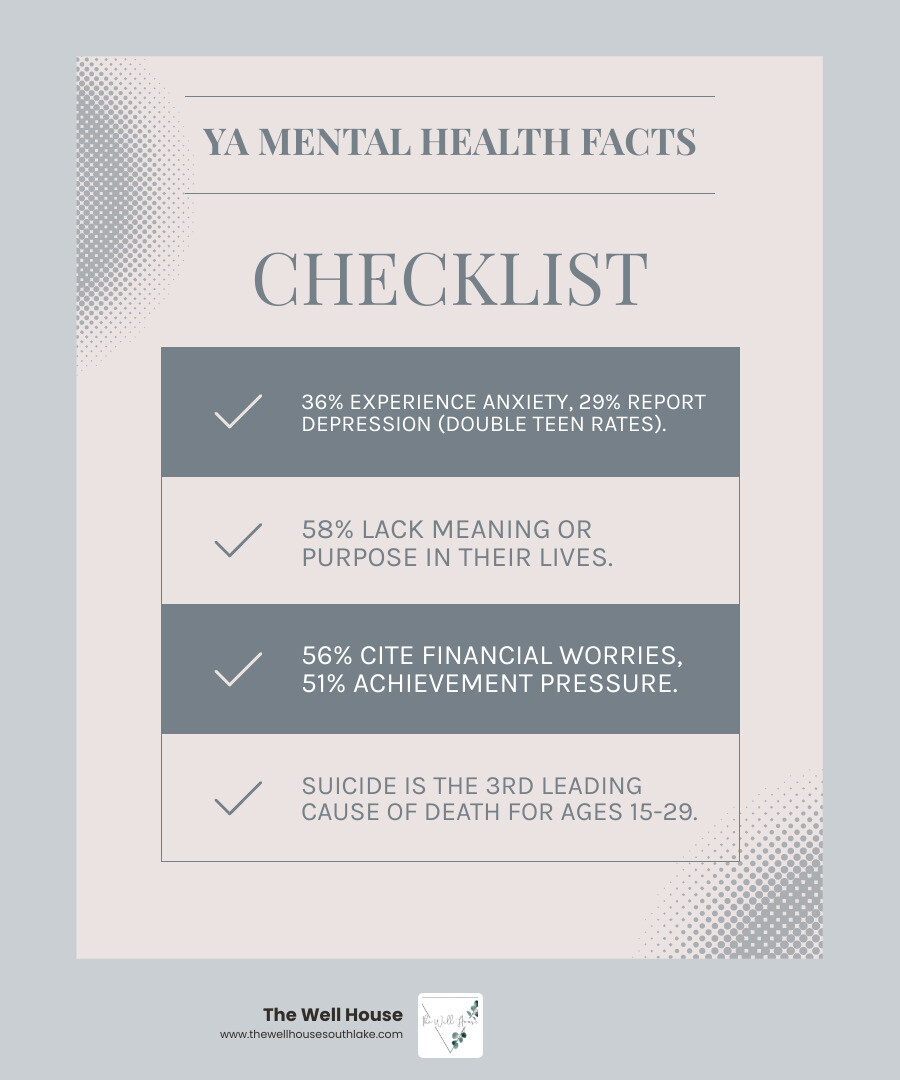
Young adult mental health is in crisis. The statistics are sobering:
- 36% of young adults (18-25) experience anxiety, double the rate for teens.
- 29% report depression, compared to 15% of teens.
- Nearly 3 in 5 (58%) lack a sense of meaning or purpose.
- Suicide is the third leading cause of death for ages 15-29.
- Financial worries (56%) and achievement pressure (51%) are top stressors.
These numbers represent real people navigating one of life’s most turbulent transitions. Young adults (ages 18-25) stand at a unique crossroads, facing major life decisions about education, careers, and identity amid economic uncertainty and global turmoil. They report higher rates of anxiety, depression, and loneliness than teens, often feeling like they don’t matter while questioning the purpose of their achievements.
However, there is hope. This generation is more emotionally aware and willing to discuss mental health than any before it. This openness breaks down stigma and creates pathways to healing.
This guide will help you understand the challenges young adults face and what can be done. Whether you’re a parent, a young adult, or a concerned friend, you’ll find clear information and practical steps forward. I’m Jennifer Kruse, a Licensed Professional Counselor Supervisor, and I specialize in helping individuals steer young adult mental health with a holistic, soul-mind-body approach.
Know your young adult mental health terms:
The ‘On Edge’ Generation: Understanding the State of Young Adult Mental Health

The years between 18 and 25, often called “emerging adulthood,” are a period of immense change. Young people are learning to be independent, making career choices, and figuring out who they are. While exciting, this time brings significant pressure, making young adult mental health especially vulnerable.
Recent reports confirm how tough it is. Young adults in the U.S. face anxiety and depression at nearly double the rate of teenagers. When these issues go unaddressed, the consequences can be heartbreaking. Suicide is the third leading cause of death for people aged 15-29, and among young adults (16-24), 6.2% have attempted suicide and 8.9% have engaged in self-harm. These statistics highlight the urgency of supporting young adult mental health. For more on this, our guide on Social Anxiety in Young Adults offers valuable information.
Here’s a quick comparison of how anxiety and depression rates stack up:
| Condition | Young Adults (18-25) | Teens (14-17) |
|---|---|---|
| Anxiety | 36% | 18% |
| Depression | 29% | 15% |
The Most Prevalent Mental Health Challenges
Young adult mental health involves a range of challenges that can make daily life difficult.
- Anxiety disorders are common, going beyond everyday worry to intense, ongoing dread or panic. New responsibilities and social expectations can worsen these feelings.
- Depression is more than sadness; it’s a lasting low mood, loss of interest, and feelings of worthlessness that interfere with life.
- Suicidal ideation and attempts are a serious concern, often stemming from hopelessness and overwhelming stress.
- Behavioral disorders like Attention-Deficit/Hyperactivity Disorder (ADHD) can persist into young adulthood, making school, work, and relationships harder to manage. If you’re feeling overwhelmed, our Therapy for Stress Complete Guide has helpful coping strategies.
Specific Concerns for Young Adults
Young adults also face specific concerns that require targeted support.
- Eating disorders like anorexia, bulimia, and binge eating disorder often emerge during these years. They are serious conditions with severe physical and emotional consequences.
- Substance misuse is another major issue. A young adult’s developing brain is extra sensitive to the harmful effects of drugs and alcohol, which are sometimes used to cope with underlying mental health struggles. About 40% of young adults aged 16-24 have used illicit substances at least once.
- First-episode psychosis, involving symptoms like hallucinations, can appear in late adolescence or early adulthood. Quick intervention is crucial.
- Risk-taking behaviors, such as unsafe sex or reckless driving, are common. While some risk-taking is normal, it becomes a problem when used to cope with emotional distress.
If you’re worried about substance abuse, you can find treatment centers through SAMHSA’s Behavioral Health Treatment Services Locator.
Why Now? Key Stressors Driving the Crisis

Today’s young adults are navigating a perfect storm of pressures. According to Harvard’s “Making Caring Common” report, specific stressors are taking a heavy toll:
- 56% say financial worries are damaging their mental health, from student debt to the high cost of living.
- 51% report that achievement pressure negatively affects them, fueled by a culture of constant optimization.
- 58% say they lack meaning or purpose, feeling empty even after achieving external goals.
- 44% feel they don’t matter to others, and 34% report feeling lonely, as digital contacts replace deep connections.
For practical ways to manage these feelings, explore our guide on Stress Management Young Adults.
The Weight of the World
Young adults also carry the weight of global crises that feel personal and urgent.
- 45% report that a general sense of things falling apart is harming their mental health, after living through multiple “once-in-a-lifetime” events.
- 42% cite gun violence as a negative factor, having grown up with active shooter drills.
- 34% point to climate change as a source of distress, creating uncertainty about the future.
- 30% are impacted by worry over incompetent or corrupt political leadership, breeding a sense of helplessness.
These are not abstract concerns; they are lived experiences. To learn more, read the Harvard report on young adult mental health challenges.
The Pressure to Succeed
The culture of achievement has created a trap. Many young adults are caught in an “achieving to achieve” cycle, pursuing success without a deeper sense of why, leaving them unfulfilled. When self-worth is tied to accomplishments, any setback can feel like a personal failure.
Career uncertainty adds another layer of stress, as the job market demands experience for entry-level roles. The pressure to find work that is both fulfilling and financially viable can feel impossible. For those in school, academic stress is relentless, with fierce competition and staggering financial investment. This pressure doesn’t just affect grades—it seeps into every aspect of young adult mental health.
If you’re struggling with these pressures, our Career Counseling for Young Adults can help you find a path that aligns with your values.
Pathways to Wellness: Building Resilience and Finding Hope
Despite the challenges, there is immense hope for young adult mental health. This generation’s emotional awareness and openness about their struggles are powerful strengths that help end stigma and encourage early intervention. Recognizing these strengths is key to building well-being. For more insights, read our guide on Therapy for Emerging Adults.
Cultivating Meaning and Purpose
Helping young adults find meaning beyond achievement is a critical step:
- Encourage them to explore what truly matters to them, redefining success to include personal growth, relationships, and making a difference.
- Engaging in service and community through volunteering or supporting causes can provide a deep sense of purpose and connection.
- Caring for others and nurturing relationships shifts focus from personal worries to empathy and connection.
- Identifying personal values helps guide choices, leading to a more authentic and purposeful life.
Our Young Adult Life Coaching can offer support in finding this direction.
Fostering Healthy Relationships
Strong social connections are vital for young adult mental health:
- Combating loneliness involves actively seeking real connections, whether through clubs, hobbies, or reaching out to friends and family.
- Building a diverse support network of friends, family, mentors, and therapists creates a safety net during tough times.
- Focusing on the quality of relationships over quantity is essential for emotional support and a sense of belonging.
- We must create environments where young adults feel like they matter to others, addressing a fundamental need that is often unmet.
Professional Support and Strategies
Professional support is often a crucial part of wellness. A general physician can be a good first point of contact. Specialized ‘youth services’ or early intervention teams are also highly effective, offering custom support that traditional adult services may not. This kind of holistic care looks at the whole person—mind, body, and spirit—to help them thrive.
Here are some helpful resources and helplines:
- 988 Suicide & Crisis Lifeline: Call or text 988 anytime for free, confidential support. 988lifeline.org
- Crisis Text Line: Text “START” to 741-741 to connect with a crisis counselor. crisistextline.org
- National Eating Disorder Association (NEDA): Provides support, resources, and treatment options. nationaleatingdisorders.org
- National Alliance on Mental Illness (NAMI): Offers education, support, and advocacy for individuals and families affected by mental illness. nami.org/Find-Support/Teens-and-Young-Adults
- SAMHSA National Helpline: Find mental health and substance use treatment providers. findtreatment.samhsa.gov
- The Jed Foundation: Promotes emotional health and suicide prevention among college students. jedfoundation.org/students
- Active Minds: Empowers college students to speak openly about mental health. activeminds.org
- Center for Young Women’s Health and Young Men’s Health: Provides guides on emotional health, including test anxiety, depression, bullying, and eating disorders. youngwomenshealth.org and youngmenshealthsite.org
- Go Ask Alice! (Columbia University): Q&A website geared at young adults on emotional health concerns. goaskalice.columbia.edu
- Kelty Mental Health Resource Center: Offers reference sheets with top websites, books, videos, and support for mental health disorders. keltymentalhealth.ca/youth-and-young-adults
- Teens Health: Provides honest and accurate information on mental health issues for teens. teenshealth.org/teen/your_mind/
- Teen Mental Health: Learning tools on mental illnesses, videos, and resources for friends. teenmentalhealth.org
- Guide 2.0: Portal to online applications for mental disorders reviewed and rated by health experts. beacon.anu.edu.au
- Health Talk: Reflects lived experiences of mental health conditions. healthtalk.org/peoples-experiences/mental-health
- Mindfulness for Teens: Resources to help teens use mindfulness for stress. mindfulnessforteens.com
- Strength of Us: Online community for young adults impacted by mental health issues. strengthofus.org
- American Academy of Child and Adolescent Psychiatry: Resource center with videos and advocacy campaigns. aacap.org/AACAP/FamiliesandYouth/Youth_Resources/Home.aspx
- National Institute of Mental Health (NIMH): Easy-to-read guides and brochures on mental health disorders. nimh.nih.gov/health/index.shtml
- Head Meds: Information on common medicines for mental health conditions, focused on young people. headmeds.org.uk
- Making Healthy Choices: Guide for youth in foster care on mental health decisions. childwelfare.gov/pubs/makinghealthychoices/
- List of International Suicide Hotlines: suicide.org/international-suicide-hotlines.html
- Love is Respect: Peer advocacy to prevent and end abusive relationships. loveisrespect.org
- GLSEN: Ensures safe schools for all students. glsen.org
- StopBullying.Gov: Resources for teens to prevent bullying. stopbullying.gov
- Teens Against Bullying: For middle and high school students to address bullying. pacerteensagainstbullying.org
- Time to Change: England’s biggest program to challenge mental health stigma. time-to-change.org.uk
- Reach Out: Information on mental health disorders and resources for teens. au.reachout.com
- Girls Health.Gov: Guidance for teenage girls on recognizing mental health problems. girlshealth.gov/feelings/index.html
Frequently Asked Questions about Young Adult Mental Health
Here are answers to common questions that families and young adults bring to us every day.
How do I know if a young adult needs help?
It can be hard to distinguish normal ups and downs from genuine mental health struggles. The key is to look for significant and persistent changes from their usual self. Trust your instincts; if something feels off, it’s time to pay attention.
Watch for these warning signs:
- Behavioral Changes: Withdrawing from activities they once enjoyed, isolating from friends and family, or a sudden drop in academic or work performance.
- Mood Changes: Prolonged sadness, persistent irritability, overwhelming anxiety that interferes with daily life, or feelings of numbness and emptiness.
- Expressions of Hopelessness: Talking about feeling worthless, expressing disproportionate guilt, or making statements like “everyone would be better off without me.” Take any mention of self-harm or suicide seriously.
- Physical Changes: Significant weight loss or gain, dramatic shifts in sleep patterns (too much or too little), or frequent unexplained headaches or stomachaches.
- Increased Risk-Taking: A new or worsening pattern of substance misuse, reckless driving, or other dangerous behaviors.
If these changes last for more than a couple of weeks, it’s time to have a conversation. For a comprehensive list of signs, see the resources from the National Alliance on Mental Illness: Know the Warning Signs from NAMI.
What is the first step to getting help for young adult mental health?
Taking the first step is the hardest part, but it’s a sign of strength. The right time to start is now.
- Start with a conversation. Talk to someone you trust—a parent, friend, professor, or coach. If you’re concerned about someone else, approach them with compassion. A simple, “I’ve noticed you seem stressed lately. I’m here to talk,” can open the door.
- Find the right therapist. Look for a professional who specializes in working with young adults. At The Well House, we serve young adults from Southlake, Westlake, and surrounding areas, using a holistic approach to address the whole person—mind, body, and spirit. Learn more about our Counseling for Young Adults services.
- Check your health insurance. Call the number on your insurance card to ask about your mental health benefits, including coverage, referrals, and in-network providers.
Starting with a general physician is also a valid option. There is no single “right” way to begin; what matters is that you start somewhere. Seeking help is a brave and mature step toward wellness.
How can I support a friend or family member who is struggling?
Watching someone you love struggle is painful. You can’t fix their challenges, but you can be a steady, supportive presence.
- Listen without judgment. Your goal is to validate their feelings, not to solve their problems. Put your phone away, make eye contact, and let them talk. Simple phrases like, “That sounds really hard,” are more helpful than unsolicited advice.
- Offer practical support. Instead of a vague “let me know if you need anything,” be specific. Offer to bring dinner, help with laundry, or accompany them to an appointment. Small, concrete gestures mean a lot.
- Encourage professional help. Gently but persistently suggest they talk to a professional. You can say, “I think talking to someone trained in this could help. Would you be open to that?” Offer to help them research therapists if they feel overwhelmed.
- Set boundaries to protect yourself. Supporting someone with a mental health challenge is emotionally draining. It is essential to take care of your own well-being. It’s okay to need space and to maintain your own support system. You cannot pour from an empty cup, so don’t neglect your own mental health.
Taking the Next Step Towards a Healthier Future
We’ve looked honestly at the mental health crisis facing young adults—the anxiety, depression, and overwhelming pressures of this unique life stage. But we’ve also seen that young adult mental health challenges do not have to define a person’s story.
This generation’s remarkable emotional awareness and willingness to talk openly is breaking down stigma and creating real opportunities for healing. By cultivating meaning, building genuine connections, and accessing the right support, change happens. Healing is not just possible; it’s happening every day as young adults learn to manage their mental health and build lives that align with their values.
At The Well House in Southlake, TX, we understand the challenges facing young adults in our community, from Westlake to Grapevine. Our collaborative, holistic approach nurtures the whole person—mind, body, and spirit. We work alongside young adults and their families to identify strengths and create pathways toward genuine wellness.
Whether you are a young adult feeling overwhelmed, a concerned parent, or a friend, know this: it’s okay to not be okay, and it’s brave to seek help.
Taking that first step requires courage, but you don’t have to do it alone. The challenges are significant, but so is the capacity for growth, healing, and hope. What matters is that you take the next step.
Begin your journey with Young Adult Therapy in Southlake, TX. We’re here to walk alongside you.